
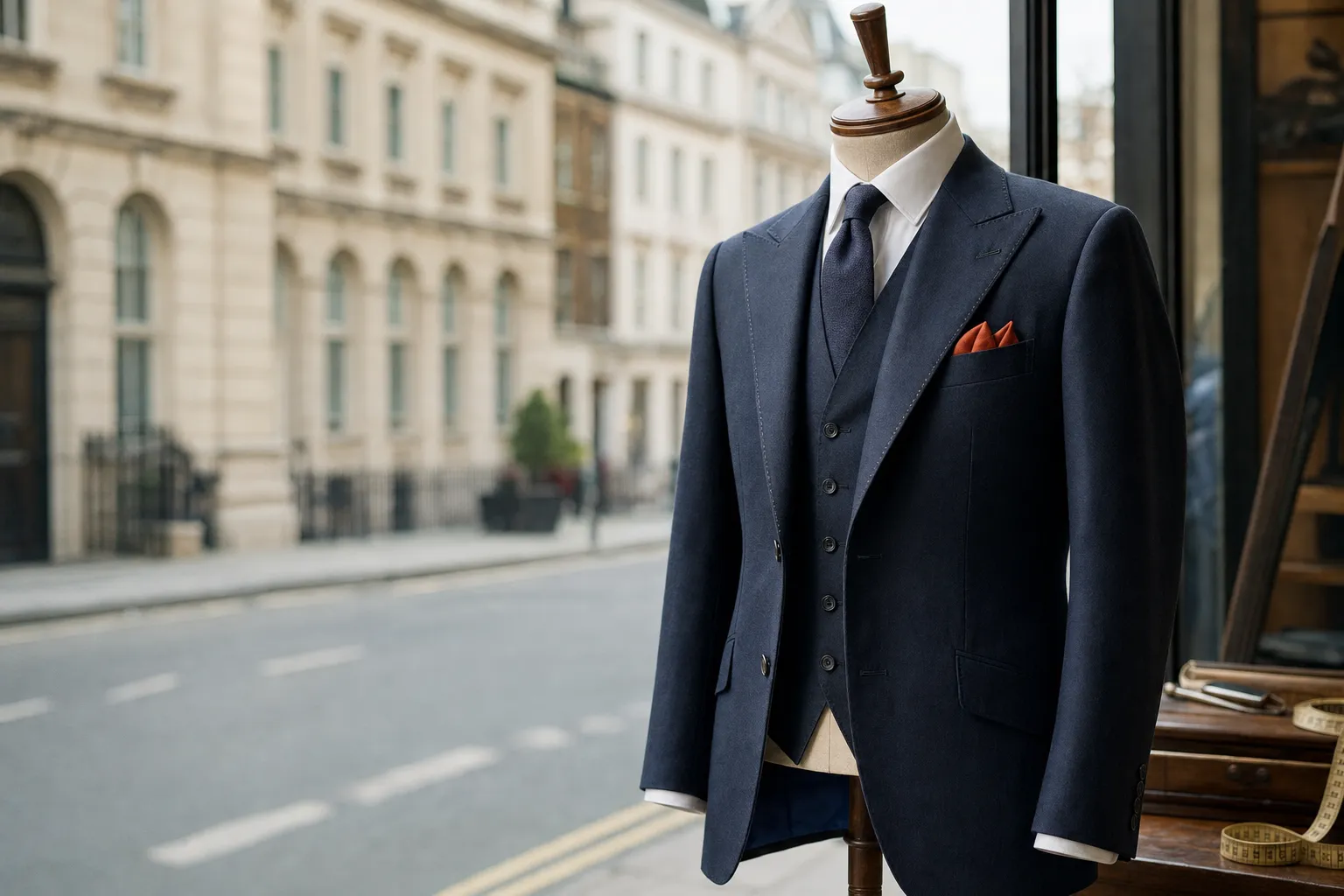
Documenting measurements, fabric choices and event details directly determines how a bespoke groomsmen suit looks, fits and sits with the rest of the party. At Dress2Kill we collect and use detailed notes and photographs so each groomsman receives a garment that fits his role and the wedding aesthetic in Waterloo, England.
Why documentation matters for groomsmen suits
Groomsmen suits are not a series of separate garments. They must read as a coherent group on the day while fitting each man properly. Good documentation reduces variation, prevents mistakes and shortens the number of fittings.
When we say documentation we mean more than a single measurement sheet. We include event logistics, role assignments, photographs, footwear notes, accessory choices and any styling exceptions. This context guides pattern cutting, fabric pairing and finishing decisions.
What to record for reliable groomsmen tailoring
Below are the categories of information that make the biggest difference. We ask the groom to collect or confirm these details early so we can plan fabric orders and fitting dates.
- Event basics, including wedding date, ceremony time, venue and photography schedule.
- Groomsmen roles, for example best man, ushers and page, so we know who needs matching extras like waistcoats or pocket squares.
- Measurements and current clothing sizes, with notes on posture, shoulder slope and any physical asymmetry.
- Photos showing full body front, side and back, plus detail shots of current garments that fit well.
- Fabric choices and swatch approvals for suit cloth, lining and buttons.
- Accessory plan, including ties, cravats, lapel flowers and shoes, and whether groomsmen will supply their own items.
- Deadline constraints, such as early delivery for pre wedding events or travel arrangements.
How we use documentation in our tailoring process
We translate notes into patterns, fittings and finishing. The process looks like this for a groomsmen party.
- Initial consultation. We review event details, discuss the visual goal and select fabric swatches together. For wedding parties in Waterloo we factor in local venues and seasonal light for colour choices.
- Measurement session. We take precise measurements and record posture notes. If a groomsman cannot attend in person we advise on the best photos and garments to bring.
- Pattern creation. Our cutters use the measurement set and photos to draft a master block. Notes about shoulder slope, chest build and preferred trouser break are annotated on the pattern.
- First fitting. We assess balance and proportion. Any changes are recorded on the pattern for the remainder of the party, ensuring consistency across suits.
- Final finishing and quality check. We confirm lining, buttons and trousers align with the recorded plan. Each garment receives a final inspection against the original documentation.
Pro tip: A single photo of all groomsmen standing together in the outfit you hope to achieve is one of the most useful pieces of documentation. It communicates group balance, relative heights and proportion in a way measurements alone cannot.
Timeline and who does what
Starting early reduces risk. Below is a recommended timeline for a typical wedding when bespoke tailoring is required.
- 10 to 12 months before the wedding, confirm the overall style and fabric. This is especially important for rare cloth that requires long lead times.
- 6 to 8 months before, schedule in person measurements and place formal orders. We recommend allowing time for fabric delivery and initial pattern work.
- 6 to 10 weeks before, book the first fittings so there is time for adjustments for the rest of the party.
- 2 to 4 weeks before, final fitting or collection. We reserve a short window for last minute minor adjustments.
Grooms and groomsmen preparation checklist
- Confirm roles and list who will be measured in person.
- Decide which accessories you want to match or vary.
- Collect photos of preferred suits and current garments that fit well.
- Agree on a single person to approve fabric swatches and final samples.
Common documentation mistakes and how we avoid them
Poor or inconsistent notes are the main cause of ill matching suits. Here are recurring issues and our approach to preventing them.
- Inconsistent measurement sources. We standardise all measurements by taking them ourselves or by using a single approved measurement sheet.
- Late design changes. We log every change and evaluate its impact on production time and fit. Last minute alternations often require an extra fitting.
- Assuming clothing sizes match measurements. Clothing sizes do not equal bespoke measurements. We translate sizes into measurements and then into patterns for accuracy.
Watch out: Asking groomsmen to measure themselves can introduce errors that are hard to correct at the fitting stage. Self measured garments often need more adjustments, which risks consistency across the party.
Decisions where documentation matters most
Some choices have disproportionate effect on appearance when scaled across several men. Recording them avoids small inconsistencies that look obvious in group photographs.
- Lapels and collar roll, which change perceived chest and neck proportions.
- Trouser break and rise, affecting how trousers sit with shoes and outerwear.
- Waistcoat length and button stance, for layered looks where balance is critical.
- Lining colour and button finish, because small accents show up in photos and in movement.
How Dress2Kill balances consistency and individual fit
Our aim is a consistent group appearance with individually excellent fit. We use the master pattern and annotated notes so suits read the same on different body shapes. At the same time we respect each client s comfort preferences and posture.
For example, we may keep lapel shape identical across the party but adjust shoulder pitch or sleeve length to preserve proportion. Documentation records both the standardised elements and the personalised adjustments.
That approach is the same whether we make tailored morning suits, tailored wedding suits or tailored jackets. It is why we link planning notes with pattern files and the garment recording sheet.
Learn more about our approach to wedding tailoring on the tailored wedding suits page and the broader groomsmen suit planning topic page.
Find practical background on fit and fabric choices on our suit fit and suit fabrics topic pages and browse the Dress2Kill locations hub for in person consultation options near Waterloo.
Key takeaway
Thorough, early documentation of measurements, fabric choices, roles and accessory plans gives predictable fit and consistent style for groomsmen. We use those notes at each stage from pattern cutting to final inspection to make sure the party looks and feels aligned on the day.
Frequently asked questions
What should I bring to a groomsmen measurement appointment?
Bring the shoes you plan to wear with the suit or a similar pair, any shirts you want the suit to fit with, and photographs of styles you like. If someone cannot attend, supply recent photos showing front, side and back and a loaf of clothing that fits well for reference.
Can groomsmen be measured at different times and still have a matched look?
Yes, providing we use the same documentation, fabric and reference design. We keep a master pattern and log all adjustments so suits remain consistent even when measurements are taken on different days.
How far in advance should fabric be selected for bespoke groomsmen suits?
Select fabric as early as possible. Ten to twelve months ahead is ideal for rare cloth. For most British cloth stocks choose at least six months before the wedding to allow for ordering and production.
What happens if a groomsman gains or loses weight after measurements?
Notify us as soon as you can. Small changes can be incorporated at fittings. Significant weight change may require pattern alteration and a later fitting or a remade garment, which is why early notice and staged fittings matter.
Do you make morning suits and how does documentation differ?
We do make tailored morning suits. Documentation for morning dress places extra emphasis on lapel shape, waistcoat counts and fabric weave because traditional proportions are stricter than for lounge or dinner styles.
Learn more and check our local listings
Read our full guide to groomsmen suit planning to see examples of documentation and timelines, and visit the tailored wedding suits page to see the kinds of arrangements we produce for wedding parties.