
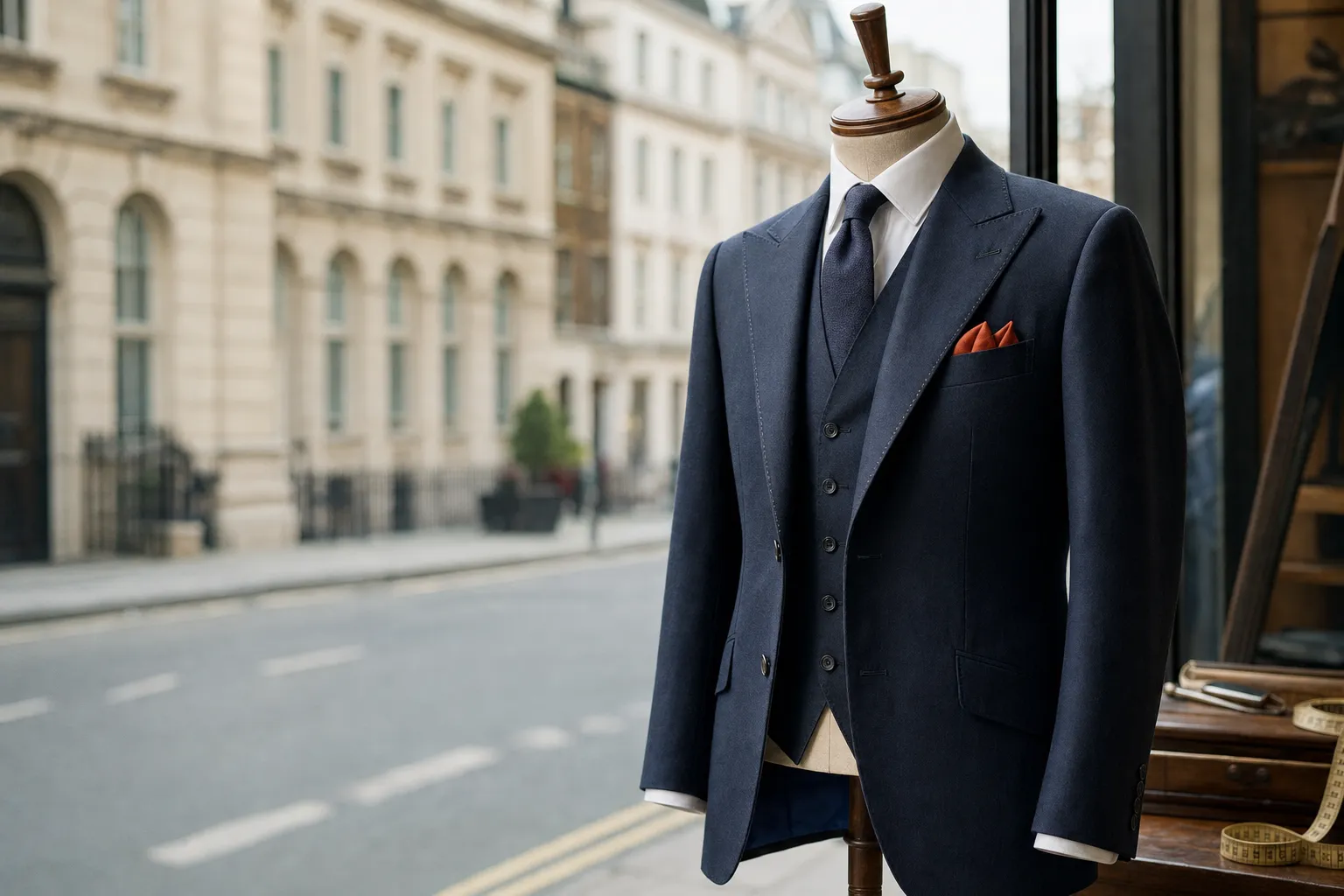
Reviewing morning suit accessories before you start a bespoke suit is essential. We advise every client to decide on key accessories at the design stage because those items change proportions, fabric choices and construction details, and they stop avoidable alterations later on.
What is a morning suit accessories review
A morning suit accessories review is a focused discussion about the items that will be worn with a morning coat and trousers. It covers the waistcoat style and fabric, shirt collar and cuff choices, tie or cravat style, pocket square, shoes, braces or belt, hat and any finishing items such as cufflinks, tie pins and boutonniere pins. The review happens before pattern cutting so we set the garment to work with the complete outfit rather than against it.
you can quote
Decide on your waistcoat, neckwear and shoe style before measurements so the tailor can set balance, button stance and sleeve length to match the actual look you will wear. That single step reduces guesswork in the pattern and limits later adjustments.
Why this matters for Bankside and greater London weddings and events
Morning dress is common at weddings, formal daytime events and theatre occasions across London. In Bankside, clients often attend riverside ceremonies, city halls and historic venues where photographs and movement matter. Accessories change the way a coat sits on the chest, how trousers hang from the waist, and how visible the shirt and waistcoat are in photographs.
When we design in the studio we think in three dimensions: how the lapel folds with a cravat, how a high waistcoat alters the visual waist, and how shoe choice affects trouser break. Those are practical choices that are especially important for clients walking between venues in central London, or who will be photographed on steps, balconies and riverfronts.
Key concepts to review before pattern cutting
- Waistcoat depth and cut. A low V shows more shirt and tie. A high cut narrows the visual waist and affects where the coat fastens.
- Button stance and lapel roll. Where the coat fastens changes chest fit and the apparent length of the torso.
- Neckwear choice. Cravat, tie, or ascot each sit differently and demand different shirt collars and waistcoat coverage.
- Braces versus belt. Braces require higher waistline and a trouser waistband set without belt loops. Belts need different waistband construction.
- Shoes and hem length. Shoe profile determines trouser break and hem allowance.
- Fabric weight and lining. Heavy silk waistcoats or satin facings affect how collars and lapels press and how the coat moves.
- Photographic details. Pocket square size and boutonniere placement change the chest area the tailor must leave clear when shaping the front.
How accessories affect tailoring decisions
We explain the practical effects so you can see why a preconstruction review is not a nicety. Below are the most common tailoring consequences of accessory choices.
- Proportion and balance. A full cravat requires a higher lapel roll and a different chest canvas tension than a slim tie.
- Sleeve length and cuff choice. Double cuffs and bold cufflinks need a little extra shirt cuff showing, so we adjust sleeve length accordingly.
- Buttoning point. A higher waistcoat or a heavier cravat may require the coat to fasten higher to keep the waistline visually pleasing.
- Waistcoat pocket placement. Pocket watch chains or larger pocket squares need pockets set deeper or with wider mouths.
- Trouser construction. Braces need buttons and a higher rise, which changes how the seat and thighs are cut.
- Footwear and break. The shoe toe shape and heel height influence the final hem length and the amount of break we leave.
Common accessory choices and what they signal
| Accessory | When to select it | Effect on the bespoke suit |
|---|---|---|
| Single or double breasted waistcoat | Design stage | Changes front overlap and button stance, can influence chest shaping and lining choice |
| Cravat or tie | Design stage | Defines shirt collar, affects lapel roll and the amount of shirt visible |
| Braces or belt | Before pattern cutting | Determines waistband construction and trouser rise |
| Hat and gloves | Before final fittings | May require shoulder and length adjustments to keep proportions when worn |
What a typical review looks like at Dress2Kill
We run the accessories review as part of our measurement and consultation process for Tailored Morning Suits and Bespoke Suits. The session includes fabric samples and a discussion about the intended occasion, photography needs and coordinating party outfits.
- Confirm the occasion. We record the venue, timing and whether you will walk or ride between locations. Those details influence fabric choice and lining weight.
- Choose primary accessories. Waistcoat style, neckwear and footwear are decided. We supply sample waistcoat linings and neckwear to see the combined effect.
- Set technical points. Button stance, sleeve allowance for cuff show, trouser rise and hem allowance are marked on the pattern sheet.
- Photograph and note. We photograph the ensemble on a fitting form so the cutting room team has a visual reference.
Pro tip: Bring the exact shoes and waistcoat fabric swatch to your first fitting. Small differences in sheen or heel height change the hem by millimetres, but those millimetres matter in photographs.
Common questions clients ask during the review
- Should I wear braces or a belt with morning dress? Braces are traditional with morning dress and give a cleaner silhouette, but for comfort some prefer a hidden elasticised waist. Choose braces early because they change waistband construction.
- Can a waistcoat be added later? Yes, but adding a deep or heavily padded waistcoat after the coat is cut often requires rebalancing the front, and that can add time and expense.
- What about matching the groomsmen? If you want a coordinated look, bring sample ties and pocket squares for the whole party. We can plan subtle differences that maintain cohesion without identical items.
- Do accessories affect fabric selection? They do. A heavy silk cravat looks best with a finer worsted coat, while a textured tie can sit well with heavier tweed or hopsack fabrics.
Related services and further reading
For clients who want the complete service we provide tailored morning suits and full bespoke suits. See our Tailored Morning Suits page for service details and what each fitting stage includes.
We also work on tailored wedding suits and business suits, and we keep notes about accessories and party coordination with every commission. To learn more about how we approach fit and fabrics, read our topics on morning suit accessories and suit fit.
Related locations and why venue matters
Different venues in central London and Bankside present different practical needs. A riverside ceremony can be breezier, requiring heavier fabrics or secure fastenings for waistcoats. Historic halls often demand a traditional silhouette, while theatre and gallery events sometimes allow more contemporary accessories.
We account for likely movement and weather when advising on gloves, hat types and waistcoat fastening. If you have multiple venues on the same day tell us at the review so we can recommend fabrics that perform across situations.
Helpful resources and further reading
We recommend these external references for technical background on tailoring and fabric care. They complement the practical advice we give in the studio.
- Victoria and Albert Museum, article on tailoring history and technique for context and historical reference.
- Manufacturer fabric care guides, for example guidance from established cloth houses about handling silk and worsted fabrics to protect accessories and linings.
Watch out: Don’t leave accessory decisions until the last fitting. Late changes to waistcoat type or neckwear are often the reason for rework and extra fittings.
Key takeaway
Deciding on your waistcoat, neckwear and footwear before pattern cutting keeps proportions correct, reduces alterations and ensures the finished morning suit looks coherent in person and in photographs. We run a concise accessories review as part of our Tailored Morning Suits service to set those decisions in the pattern.
Frequently asked questions
Do we need to match accessories for the whole wedding party?
Matching can be full or partial. We recommend a sample palette and then small variations so individual fits remain correct. Bring samples for at least one groomsman so we can see how the look scales across different heights and shapes.
Can a morning suit be adapted if I already own a waistcoat?
Yes, we can design the coat and trousers to suit an existing waistcoat, but you should bring the actual item to the first meeting so we can match proportions and fabric tones.
Will accessory choices change delivery time?
Not usually, provided choices are confirmed during the initial design stage. Late changes to core items like waistcoat style or braces may add extra work and affect the schedule.
What should I bring to the accessories review?
Bring the shoes you intend to wear, any waistcoat fabrics or existing waistcoats, a shirt if you already have one, and photographs of the look you want. That material speeds decisions and helps us plan the pattern correctly.
How do you handle party coordination for multiple suits?
We keep a coordination file for each party and note accessory choices. For larger groups we recommend a single appointment for samples, and individual fittings to adjust each pattern, so the overall look is consistent but each garment fits correctly.
Where to learn more and check our location
See reviews and directions on our Google Business Profile and read further guidance on morning dress in our topics section. For more about the services we offer, visit our pages on Tailored Morning Suits and Bespoke Suits.