
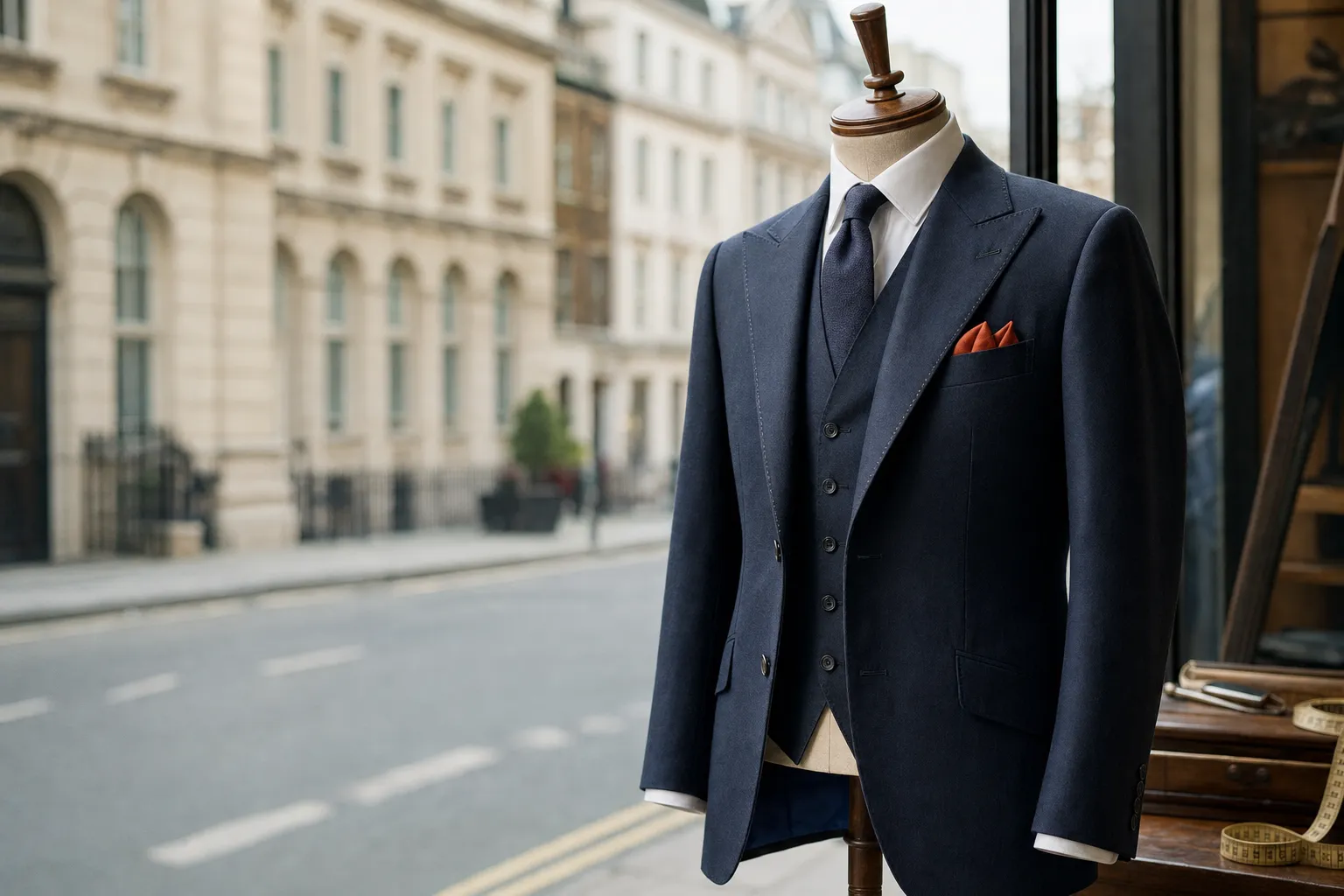
Before you start a bespoke suit, ask these core questions so you know exactly what you will get: which construction method will be used, how many fittings are included, who will cut your pattern, which fabrics and linings are available, how long the process will take, and what finishing and pressing routines the studio follows.
What is suit construction
Suit construction is the set of methods tailors use to join fabric, interlinings and canvases so the jacket and trousers hold shape, move with you and age well. Construction covers whether a jacket has a full canvas, a half canvas, or a fused interlining, how the shoulder is built, how lapels roll, and how pockets and vents are finished. These details determine how a suit looks on the body, how it wears over time, and how easy it is to alter.
For background on bespoke tailoring as a craft, the Savile Row Bespoke definition is a useful reference, and the Wikipedia entry on bespoke tailor offers helpful historical context.
Why suit construction matters for you in Holborn and Camden
In central London neighbourhoods such as Holborn and Camden clients need garments that work for a range of occasions, from court appearances and boardroom meetings to evening performances and weddings. Construction affects appearance, comfort and longevity. A well constructed jacket drapes over the shoulder without breaking the line, holds its chest shape after repeated wear, and can be altered with confidence years later.
When you commission a suit in London you are not only buying a look but an investment in fit and service. Knowing what to ask helps you compare offers without relying on price alone, and it helps us at Dress2Kill show you the options and tradeoffs that matter.
Key concepts to understand
- Canvas. The layer between outer fabric and lining that gives a jacket structure. Full canvas is shaped across the whole chest, half canvas supports only the chest and lapel, fused uses adhesive. Canvas type has a big effect on drape and longevity.
- Pattern cutting. The tailor or cutter creates a paper pattern from your measurements. A bespoke pattern is unique to you and is where the fit really happens.
- Basted fitting. An early fitting where a loosely assembled garment, often called a basted toile, lets you see posture, sleeve pitch and shoulder line before final finishing.
- Lapel roll and chest shape. How the lapel curves from collar to chest and how the chest sits on the body. These are aesthetic choices with technical implications.
- Interlining and lining. Fabrics used inside pockets and seams that affect weight, warmth and comfort.
- Pick stitching and finishing. Hand work along edges that signals hand finishing and helps seams lie cleanly.
- Alterability. How much future adjustment the construction allows. Good construction makes sensible alteration possible.
Questions to ask at your first appointment
- Who will cut my pattern. Ask whether the head cutter, a senior cutter, or an apprentice makes your pattern. In bespoke tailoring the cutter’s experience shapes the fit.
- Which construction will you recommend and why. Ask for the tradeoffs between full canvas, half canvas and fused construction, and which they suggest for your body type and intended use.
- How many fittings are included and what happens at each. Ask what the basted fitting shows, when sleeves are set, and how final adjustments are handled.
- What fabrics and linings are available. Ask where fabrics come from, cloth weight and season suitability, and whether they have performance finishes such as water resistance.
- How do you handle shoulder construction. Soft shoulders, structured shoulders and sleeve head shaping affect movement and posture. Ask which suits your wardrobe.
- How do you finish lapels, buttonholes and pockets. Ask whether finishing is done by hand and which decorative or functional options are possible.
- What ongoing care do you recommend. Ask about pressing, storage, and how to care for canvas construction so the suit performs over years.
- What is the typical turnaround and staging. Ask for an outline of the work stages and the expected time between initial measuring and final collection. Timelines vary with complexity and fabric availability.
How we at Dress2Kill approach construction and fittings
We focus on clear measurement, careful pattern cutting and staged fittings so you see how the garment is developing. Typically we begin with a consultation and fabric selection, followed by precise measurements. A basted fitting lets us adjust posture and balance before we secure the canvas and finish seams. Final pressing and finishing ensure lapels, vents and pockets sit as intended.
Pro tip: Bring a shirt, shoes and the kind of clothing you plan to wear under the suit to your first appointment. That helps us set the correct jacket length and trouser break.
Decisions you will need to make
Tailoring checklist
- Fabric and weight, seasonal suitability and cloth origin
- Construction type, full canvas, half canvas or fused
- Number and timing of fittings
- Lapels and collar shape
- Shoulder style and sleeve finish
- Pocket style and placement
- Vents, lining and internal finishing
- Alteration policy and future tailoring options
Comparing construction types
| Construction | How it looks and feels | Durability and repair | When to choose |
|---|---|---|---|
| Full canvas | Natural drape, follows body contours, develops character with wear | High durability, easy to rework by a cutter years later | For long term investment pieces and classic tailoring |
| Half canvas | Balance between structure and cost, good lapel roll | Good durability, simpler to alter than fused | For clients who want quality feel with more approachable cost |
| Fused | More rigid initially, can look flat over time if low quality | Harder to repair, may delaminate after heavy wear | For lighter use garments where budget and speed are priorities |
Common misconceptions and objections
Many clients assume bespoke always means heavy classical styling. Bespoke is a methodology not a look. We can create contemporary silhouettes, slim fits or traditional shapes using bespoke pattern cutting. Another common belief is that all canvas is the same. Canvas quality, provenance and how it is shaped make a significant difference to wear and drape.
We are happy to show samples of canvases, stitch work and previous basted fittings so you can see the difference in person.
Related services we provide
Dress2Kill offers a range of services that sit alongside bespoke suit construction and can be useful when planning a wardrobe or event. For detailed suit commissioning we offer our Bespoke Suits service page. For weddings or formal daytime events we also provide Tailored Wedding Suits and Tailored Morning Suits. If you are building a business wardrobe you may find our Tailored Business Suits and Tailored Jackets pages helpful.
Related locations and where we serve
We are based in London and work with clients across central neighbourhoods including Holborn and Camden. If you are researching local options, our locations page lists studio information and directions for the London area.
For guidance on fit and fabrics within suit construction, our Suit Construction topic page covers technical choices, and our Suit Fabrics page helps with cloth selection and seasonality.
Helpful external resources
Definitions and background on bespoke tailoring are widely discussed by trade organisations. The Savile Row Bespoke definition explains the craft standards that have guided British tailoring. The Wikipedia entry on bespoke tailor gives a historical overview. For consumer rights when commissioning custom garments, the UK government guidance on consumer contracts and goods is a useful reference.
Sources cited: Savile Row Bespoke, the bespoke tailor article on Wikipedia and the UK government guidance on consumer rights.
Key takeaway
Ask about construction method, pattern cutter responsibility, number of fittings, fabric provenance and lead time. Those questions reveal the quality markers that matter and help you decide how to invest in a suit that will perform for years.
Frequently asked questions
What is the difference between bespoke and made to measure
Bespoke means a cutter creates a unique paper pattern from your measurements and posture, and the garment is built and fitted in stages. Made to measure uses a standard pattern that is altered to your measurements. Bespoke offers greater control over silhouette and proportion, while made to measure is a faster route to a personalised fit.
How many fittings will I need
The number of fittings varies with complexity. Most bespoke suits include an initial consultation and measuring, one basted fitting to adjust posture and balance, and one or two final fittings for sleeves and trousers. We will outline expected stages during the consultation.
What should I bring to my first appointment
Bring a shirt you wear regularly, shoes you plan to pair with the suit, and any reference photos of styles you prefer. That helps the cutter set jacket length, trouser break and shoulder balance.
How long does bespoke tailoring take
Turnaround depends on fabric availability, construction and the number of fittings. A straightforward bespoke jacket can take several weeks from first measuring to completion, while a full suit with multiple fittings can take longer. We will give an estimated timeline at your appointment.
Will a bespoke suit be easier to alter later
Yes, well constructed bespoke suits with canvas layers are generally easier to alter and rework than fused garments. Tell your tailor you expect future alterations so they plan seam allowances and internal access accordingly.
How should I care for a canvas constructed jacket
Rotate wearing with other jackets, avoid over pressing, use gentle professional pressing when needed and store on a shaped hanger. Regular but careful maintenance preserves the canvas and prevents premature wear.
Learn more and find our studio
Read our Suit Construction topic page to dive deeper into canvassing, pattern making and finishing. You can also view our Bespoke Suits service page for an overview of commissions, and consult the locations page for studio details and directions around London.
Check our Google Business Profile to read recent client reviews and get directions to the studio.