
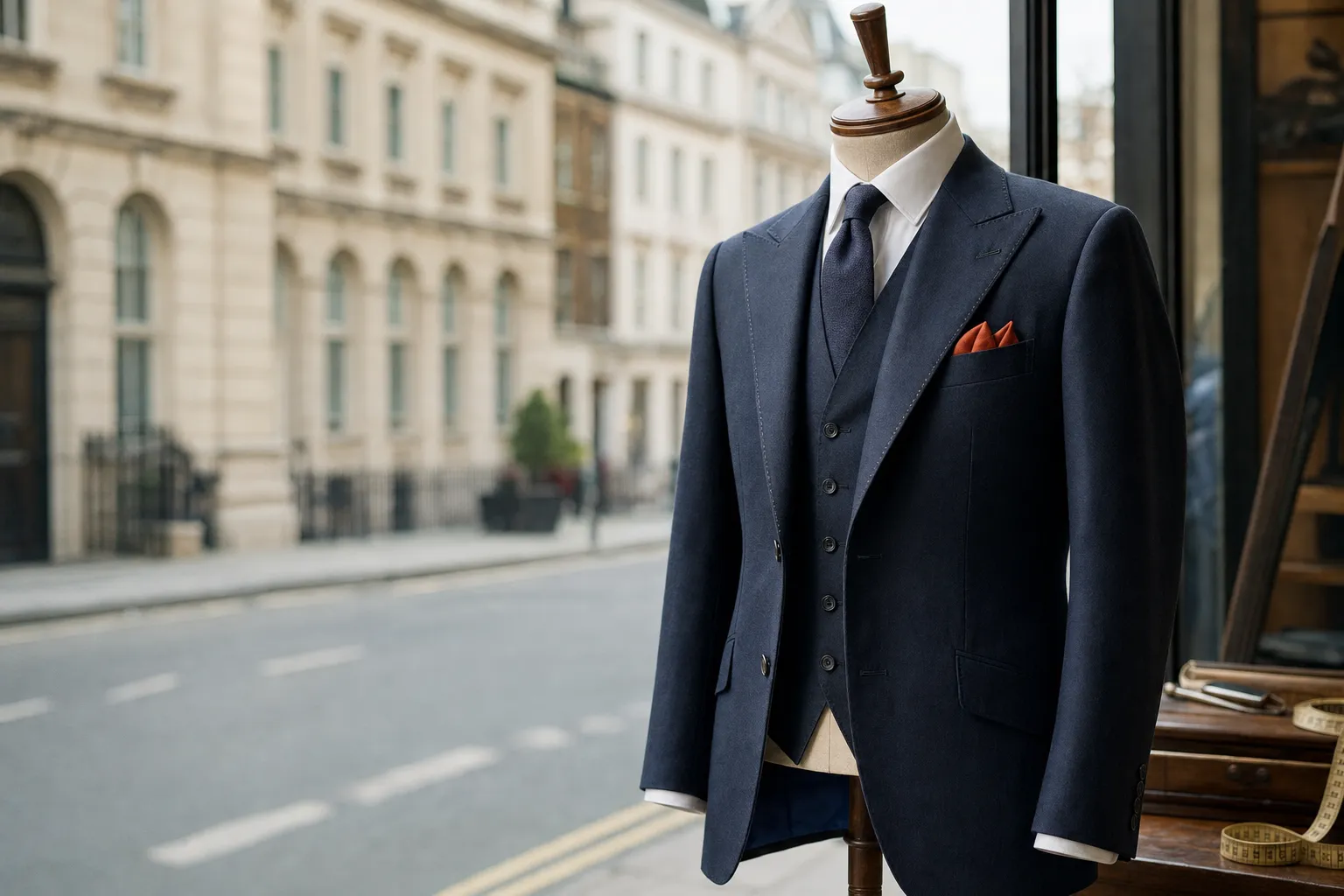
Suit fabric determines how a bespoke suit looks, feels, drapes and lasts, and for most clients it is the single most important choice after fit. We start with fabric when designing a suit because fibre, weave and weight decide silhouette, seasonality and wearability.
What suit fabric means and why it matters
Fabric is the combination of fibre, yarn and weave. Those three things control drape, texture, breathability and care. When we choose cloth with you, we think about the event, the season and how you will wear the garment over years.
- Fibre. Natural fibres like wool, linen and silk have different looks and performance. Synthetic fibres and blends add strength and crease resistance.
- Weave and finish. A twill weave drapes smoothly. A plain weave feels crisp. Finishes such as brushing create a soft, warm surface.
- Weight. Cloth weight is given in grams per metre or ounces per yard. Heavier weight equals more structure and warmth; lighter weight suits hot weather.
- Handle and drape. Handle is how the cloth feels to the hand. Drape is how the cloth falls on the body. Both affect silhouette and perceived quality.
Why fabric choice matters in St James's and London
London has seasons and occasions that shape fabric choice. We tailor suits for Trafalgar Square events, club evenings, corporate boardrooms and weddings across St James's. That variety means we must match cloth to use.
For a year round business suit we favour cloth that looks sharp under office lighting, breathes on warm days and returns to shape after a commute. For wedding and morning dress we prioritise appearance and the ceremonial silhouette. For travel or frequent wear we pick fabrics that resist creasing and show less wear.
Choosing fabric also affects construction. A fine, lightweight cloth needs softer canvassing and precise positioning to avoid wrinkles. A heavy tweed can hold a more structured shoulder without extra internal work. We explain these trade offs during your consultation.
Key fabric types and how we use them
Wool and worsted wool
Wool is the most versatile fibre for bespoke suits. Worsted wool is combed and spun to give a smooth finish that suits business and formal wear. It drapes well and resists creasing.
Flannel and brushed wool
Flannel is a brushed wool with a soft surface. It is warmer and more casual than worsted wool. We recommend flannel for winter suits and for a softer shape.
Tweed
Tweed is a durable, textured cloth often used for country wear and relaxed jackets. It holds structure and we use it for jackets, overcoats and styled separates rather than corporate suits.
Linen
Linen breathes and cools, so it is a natural choice for summer suits and destination weddings. Linen creases easily, which is part of its character. For clients who prefer a neater look we will suggest a linen blend with more shape retention.
Cotton and chino cloth
Cotton has a crisp hand and is comfortable. It is common in casual and unlined jackets. Cotton suits are less formal than wool, and we use them for relaxed daytime events.
Silk and silk blends
Silk has a natural sheen and a refined handle. We use silk sparingly, typically for linings, evening waistcoats or luxury dinner jackets where a subtle lustre is appropriate.
Blends and performance cloths
Blends combine natural and synthetic fibres to add colourfastness, crease resistance or durability. Performance cloths suit clients who travel or who need low maintenance garments.
How fabric choice affects fit, construction and longevity
Fabric and construction are a partnership. The same pattern can read very differently in two cloths. A lightweight worsted will show every tailoring line. A moleskin or heavy twill will mask minor fit issues but will also change the garment proportions.
- Drape and silhouette. Fine, lightweight fabrics show a clean, close silhouette. Stiffer, textured cloths give a fuller, boxier look.
- Canvas and internal work. Fine cloth often needs a full canvas to breathe and last. Heavier cloth can sometimes be finished with less internal shaping.
- Wear and ageing. Some fibres pill or shine with wear. Wool recovers well from crease. Linen shows lived in character quickly.
- Care and repairs. Fibre choice dictates care. We advise on safe cleaning and repair routines for each fabric.
Which fabrics suit which occasions
Below we list common occasions and the cloths we favour for each. These are general guidelines we adapt to your personal style.
- Business suits. Worsted wool with a medium weight for year round wear, sometimes with a small amount of stretch for comfort.
- Wedding suits and morning dress. Fine worsted or a blend for a crisp finish. For summer weddings we may suggest linen blends to reduce creasing while keeping a smart silhouette.
- Evening and dinner jackets. Silk blends or fine wool with a subtle sheen. Construction focuses on lapel roll and collar finish to sit perfectly under low light.
- Casual jackets. Cotton, tweed or flannel provide texture and relaxed shape for weekend wear.
These choices tie back to our services. For a bespoke wedding suit we will look at ceremony time, venue and accompanying garments, and choose cloth that supports the desired formality. See our bespoke wedding suits for more on how fabric and style combine for a wedding outfit, Tailored Wedding Suits.
Comparison at a glance
| Fabric | Best for | Typical season | Care |
|---|---|---|---|
| Worsted wool | Business suits, formal wear | All year, choose weight | Professional dry clean |
| Flannel | Winter suits, country jackets | Autumn and winter | Professional care, gentle brushing |
| Tweed | Casual jackets, country wear | Autumn and winter | Spot clean, occasional specialist clean |
| Linen | Summer suits, destination weddings | Late spring and summer | Professional or careful home pressing |
| Cotton | Casual jackets, summer suits | Spring and summer | Machine wash possible for some cloths, check label |
| Silk | Evening wear, linings | All year | Specialist cleaning |
Key concepts to look for when choosing cloth
- Thread count and yarn quality. Higher quality yarns make finer cloth and better drape. We explain trade offs in person.
- Weave pattern. Twill, plain, and herringbone affect texture and light reflection.
- Weight expressed in grams or ounces. Use weight to match season and desired structure.
- Finish and surface. A brushed finish feels soft. A glazed finish has sheen. Both change how light plays on the suit.
What to bring to a fabric consultation
- Photographs of outfits you like or the event you are attending.
- Notes about travel or frequent wear, such as commuting by car or tube.
- Any garments you want to match, such as a partner's dress or a waistcoat.
- Questions about care or allergies to certain fibres.
Pro tip: Bring the shoes and accessories you plan to wear. They help us select cloth tones and textures that work as a complete outfit.
Watch out: Choosing a fabric only from a swatch online can be misleading. Lighting and scale change how a cloth looks. We recommend viewing full width cloth in person before deciding.
Related services and where fabric choice matters most
We use fabric selection throughout our work. For made to measure and bespoke suits we consider fabric at the first consultation. You can read more about how we shape a finished garment on our bespoke suits page, Bespoke Suits.
Fabric choice also affects jacket styling and finishing. Our tailored jackets and tailored business suits use different cloths to match the intended use. For more on fabrics as part of the wider topic, see our detailed resource on suit fabrics, Suit Fabrics.
We are based in London and often advise clients from St James's. If you are in the area you can find our locations and area details on the Dress2Kill locations page, Locations.
Key takeaway
Fabric choice has a bigger impact on the final suit than most clients expect. Match fibre, weave and weight to the season, event and how you will wear the garment. We guide that choice so your suit looks intentional and performs over time.
Frequently asked questions
How do I decide between wool and linen for a wedding?
Choose wool for formality and a neat finish. Choose linen for hot weather and a relaxed look. If you want the cooling of linen with less creasing we will suggest a linen blend.
Will a lighter weight cloth mean the suit needs more tailoring work?
Yes. Lightweight cloths show every line, so we use softer canvas and more careful shaping to achieve a clean silhouette. We explain the construction choices during fittings.
Can I mix fabrics within a single outfit?
Yes. Mixing textures is common. For example, a worsted suit with a silk waistcoat or a linen jacket with cotton trousers can work well. Tell us the look you want and we will advise on compatible cloths.
How should I care for different suit fabrics?
Care varies by fibre. Wool generally needs occasional professional cleaning and gentle brushing. Linen and cotton may tolerate more frequent light pressing. Silk and delicate blends usually need specialist cleaning. We give garment specific care notes when we hand over your suit.
Do performance blends reduce the feel of a bespoke suit?
Blends can add practicality without removing the bespoke feel. We select blends that retain natural fibre hand and drape so the garment still reads as a tailored, hand finished piece.
Learn more and see fabrics in person
Check our Google Business Profile to read recent client reviews and get directions to the studio in London. You can also explore related pages on this site for more detail on fabrics and fit.