
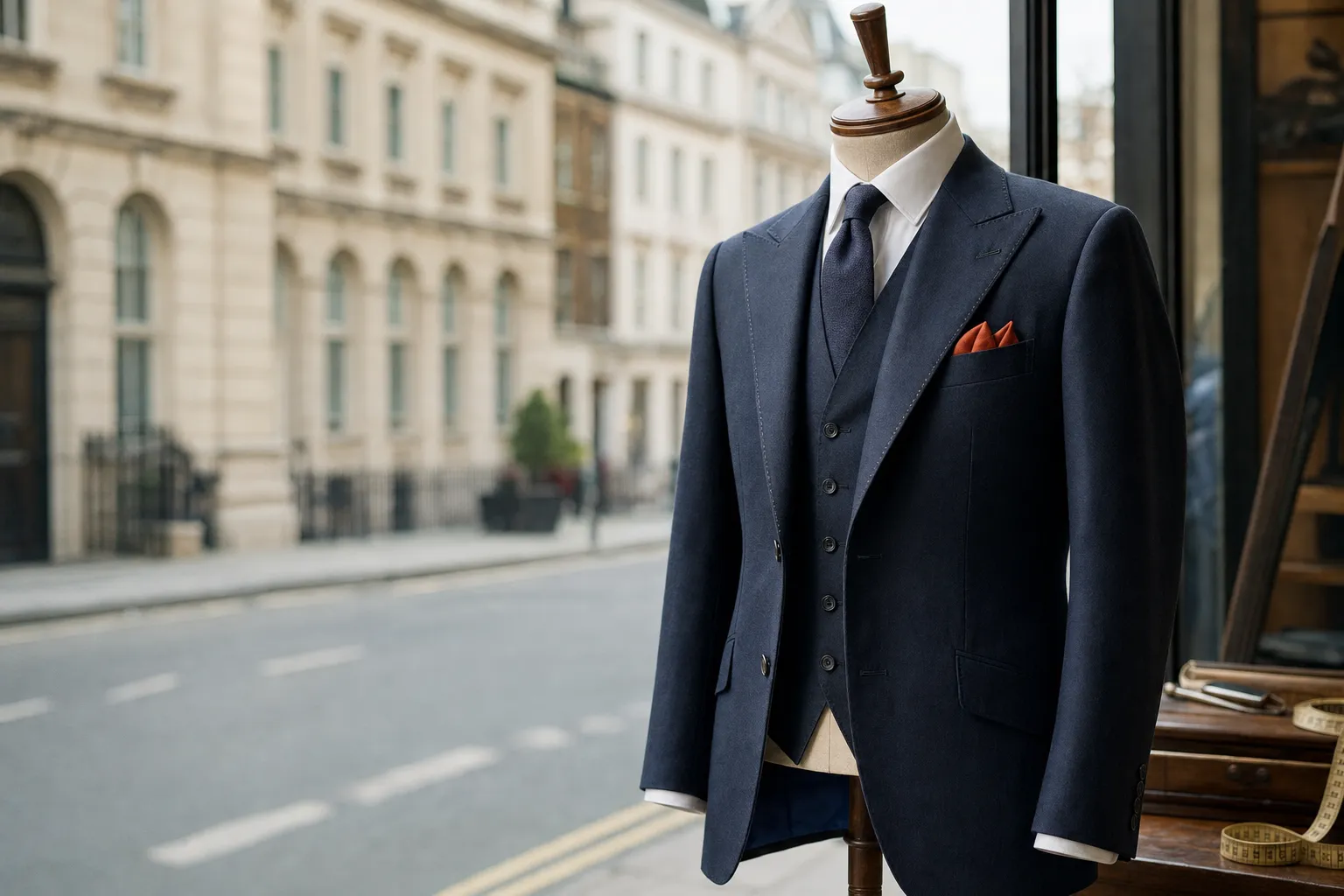
Most customers misunderstand jacket fabrics because they treat cloth as a cosmetic choice rather than a technical one. At Dress2Kill we find the three most important factors are fibre content, weave and weight, since these determine how a jacket will hang, how comfortable it is in different seasons and how it should be cared for.
Why those misunderstandings matter
Picking the wrong fabric can leave a jacket that looks fine on the rail but fails the moment you wear it: it may crease badly, feel too warm or limp, or need more maintenance than you expect. We work from measurements and use fabric knowledge to match cloth to the wearer, the occasion and the expected use. That makes the difference between a jacket you only wear once and one you reach for for years.
Common misunderstandings about jacket fabrics
1. Wool always means warm and rigid
Customers often assume the word wool alone tells them everything. In fact, wool varies enormously. Worsted wool is combed and spun to a smooth yarn that gives a clean drape and crisp lines, while woollen or flannel fabrics use shorter fibres and a looser twist, giving a softer, warmer finish with more texture. Super numbers on cloth books describe fibre fineness, not warmth or durability on their own.
2. Blends are inferior to pure fibres
Blends combine the strengths of different fibres. A wool and mohair mix can improve sheen and crease recovery. A wool and silk blend can add drape and a subtle lustre for evening jackets. Blends are not inherently inferior; they are a tool to achieve a specific performance or look. We always explain the tradeoffs so a client picks the right balance of comfort, appearance and maintenance.
3. Heavier always means more durable
Weight contributes to durability but heavier cloth can be less comfortable and may hang poorly on a lighter frame. Conversely, a midweight worsted with a tight weave can wear extremely well while keeping good drape. Think of weight in grams per square metre as one indicator among several, rather than the final answer.
4. Patterned cloth is only about looks
Checks, windowpanes and stripes change how seams match and how a jacket looks on the body. Bold patterns can draw attention to shoulders or chest. We consider pattern scale against a client’s build and the cut of the jacket so the visual effect supports the wearer rather than overpowering them.
How we explain fabric choices to our clients
We guide customers through practical considerations instead of technical jargon. When you visit us in Charing Cross we explain how each cloth behaves in three short questions: how it drapes, how it breathes and how it wears over time. That gives an immediate sense of suitability for daily office use, travel or special occasions.
- Assess the purpose. Is the jacket for everyday business wear, occasional events or a wedding? That determines the acceptable tradeoffs between crease resistance and soft drape.
- Check the fibre. Pure wool, wool blends, linen, cotton and silk each respond differently to movement and humidity. We show samples so you can feel the difference.
- Match weight to shape. Lighter cloth works better on slim frames and for unstructured jackets, heavier cloth suits more formal construction and colder months.
- Decide the finish. A brushed flannel looks very different from a polished gabardine. Finish affects sheen and snag risk.
Fabric types and what customers usually miss
Worsted and serge
Worsted cloth and serge are closely associated with business suits. They give a smooth finish and clean lines. Customers sometimes expect instant structure, but structure also depends on construction, canvasing and interlining choices we make during tailoring.
Flannel and tweed
Flannel is brushed to create a soft surface and warmer feel. Tweed is heavier, often more textured and very robust. Both suit country wear and winter city jackets, but the visual bulk can overwhelm smaller frames if not cut and lined appropriately.
Linen and cotton
Linen breathes and is perfect for summer, but it creases easily. Cotton can be more durable and less prone to visible creasing. Customers who want low maintenance often prefer cotton blends that keep some of the natural look without the continual pressing that linen requires.
Silk and velvet
Silk and velvet are dress fabrics for evening or statement jackets. They need careful handling and are not ideal for everyday wear. We usually recommend them when the jacket is intended for special occasions only.
Technical and performance fabrics
Modern performance cloths add water resistance, stretch or crease recovery. They can be useful for travel or frequent flyers, but they change the hand of the cloth and sometimes the visual finish. We discuss whether the convenience is worth the tradeoff in natural fibre appearance.
How construction and lining change fabric behaviour
Fabric is one part of the system. A half canvas, full canvas or fused chest changes how a jacket sits on the body. Lining choice alters breathability and shoulder roll. For example, a half canvas with a lightweight worsted gives mobility and structure with less weight than a heavy fused construction. When we recommend a fabric we do so with construction in mind, because that is what determines the finished look.
Pro tip: Try a finished jacket made from the same cloth before you choose. Drape and movement are much easier to evaluate on a completed garment than on a small swatch.
Care and longevity: what customers underestimate
Many misunderstandings relate to care. Natural fibres need different handling to synthetics. Wool breathes and can air between wears, while linen and cotton often need pressing. Moth prevention, correct storage and occasional professional cleaning prolong the life of a garment. We explain care routines for each fabric so the jacket stays wearable for years.
Watch out: Choosing a delicate cloth for frequent daily wear is a common mistake. If you plan to wear a jacket several times a week, select a cloth rated for regular use or choose a sturdier weave to avoid early wear and patch repairs.
Deciding factors we use for clients in Charing Cross and central London
Location and lifestyle matter. Commuting by Tube, frequent meetings, and London weather patterns make breathability and crease recovery important for many of our clients. For theatre companies and evening clients we favour richer textures and silk blends. We always balance the local context with personal taste when we select cloth.
- Commuters and city professionals often prefer midweight worsteds for resilience and a clean finish.
- Wedding parties may choose patterned or blended cloth for visual interest and better photography performance.
- Seasonal jackets use lighter linens and cottons for summer, flannels and tweeds for autumn and winter.
How we help you choose when you visit Dress2Kill
At our London studio we bring a curated selection of cloth books so you can compare fibres and weaves side by side. Our process focuses on fit, drape and long term wear rather than only pattern and colour, and we explain tradeoffs in plain language so you make an informed choice.
- Initial consultation. We discuss how you plan to use the jacket and any wardrobe it must work with.
- Fabric selection. We show swatches and explain fibre content, weave and weight.
- Sample fitting. We may show a similar finished jacket to demonstrate drape and scale.
- Final decision. We agree construction details that complement the chosen cloth.
Quick checklist before you choose a jacket fabric
- Where will you wear the jacket most often?
- Do you need low maintenance or special finish for photos and events?
- Is texture or smoothness more important to your look?
- Are you comfortable following any special care instructions?
Key takeaway
Fibre, weave and weight determine how a jacket looks, feels and wears, so treat fabric as a technical choice as well as an aesthetic one. We help clients in Charing Cross choose cloth with those tradeoffs in mind so the finished jacket fits, performs and endures.
Frequently asked questions
How do I choose between worsted and flannel for a business jacket?
Choose worsted when you want a cleaner, smoother line that resists visible creasing. Choose flannel if you prefer a softer, warmer feel and a more textured appearance. We will factor in your body shape and daily routine when advising which is better for you.
Are blends harder to care for than pure wool?
Not necessarily. Blends can be easier to maintain because synthetic fibres add stretch and crease recovery, while silk blends may need gentler handling. We explain care for each cloth before you commit.
Will a heavier cloth make me look bigger?
Heavier cloth can add visual bulk, especially in textured weaves. Fit and cut compensate for weight, so we balance cloth choice with pattern cutting to achieve the desired silhouette.
What should I tell the cleaner about a delicate jacket?
Tell the cleaner the fibre content and any special finishes. If the jacket has a delicate lining or a silk blend, professional dry cleaning with specialist instructions prevents damage. We give specific care notes with each finished garment.
Learn more and read our reviews
Find Dress2Kill on Google to read recent reviews and get directions to our studio in London. To learn more about fabric choices and fitting, read our topic page on jacket fabrics, our Bespoke Suits service overview, and the locations page for visiting information.