
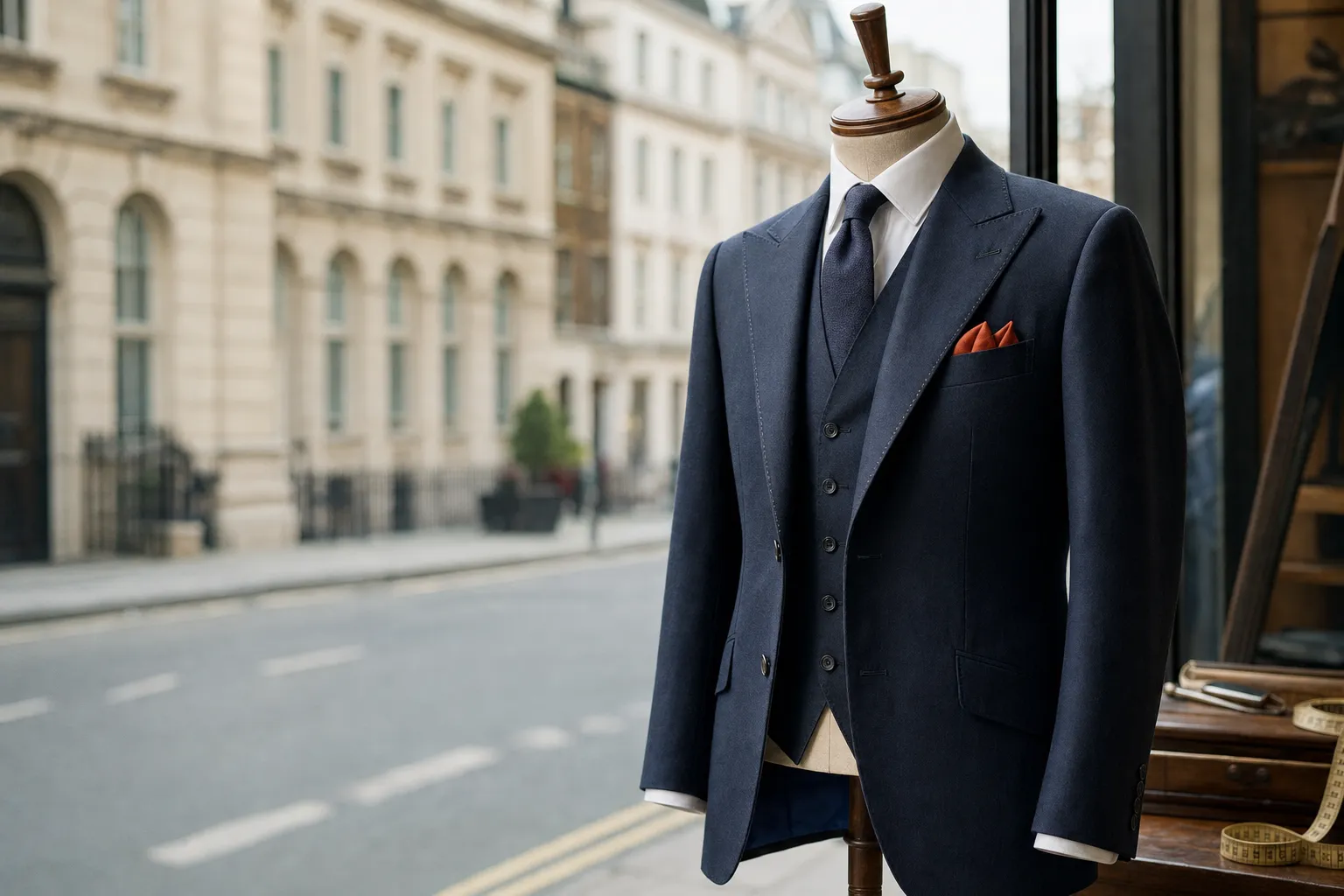
"Before you start a bespoke suit, understand the timeline, the measurement and fitting process, the key fabric and construction choices, and how the finished garment will be cared for." At Dress2Kill we say this up front so you can decide with confidence. This guide explains what a bespoke suit involves, why fit matters in London, the steps you will go through, what to bring to fittings, and common questions our clients ask.
What a bespoke suit is
Bespoke tailoring is the traditional craft of making a suit that is cut and constructed to an individual client from pattern drafting to final finishing. At Dress2Kill we produce bespoke suits and made to measure garments in our London studio, using individual measurements, paper patterns, and multiple fittings to refine fit and finish.
Unlike ready to wear, which is mass produced, a bespoke suit is built around the way you stand, sit and move. That matters for grooms, professionals and performers who require a garment that sits precisely and lasts through repeated wear.
For background on the term bespoke tailoring see the Wikipedia entry on bespoke tailoring.
Why fit and process matter in London
London has a high concentration of formal events, corporate environments and theatrical productions that place particular demands on clothing. Fit matters because how a suit looks in motion and in photographs is just as important as how it looks standing still. A well fitted suit complements your posture, is comfortable for long days, and endures frequent use.
We work with clients across the city from ceremonies at town halls to theatre companies and corporate clients. Our experience with wedding parties, black tie events and business wardrobes means we understand local expectations for fit, fabric and finishing.
Key concepts to know
- Measurements and pattern cutting. Precise measurements are used to draft a paper pattern unique to you. Pattern cutting is the skill that turns measurements into a shape that fits your body.
- Fittings. Multiple fittings allow incremental corrections to sleeve pitch, jacket length, shoulder line and trouser rise so the final garment sits as intended.
- Fabric choice. Fabric weight, weave and fibre affect drape, longevity and seasonality. Wool is common for business and wedding suits because it balances drape and resilience.
- Construction. Details such as canvassing, shoulder build and lining determine how a jacket moves and how long it retains its shape.
- Style and proportion. Lapel width, button stance and trouser break should suit your posture and the occasion, not a fleeting trend.
- Care and maintenance. Proper care keeps a bespoke suit looking its best and protects your investment.
How the Dress2Kill process typically runs
- Initial consultation. We discuss your needs, preferred styles and fabric options. This is when you tell us about the occasions you are planning for, your wardrobe, and any comfort requirements.
- Measurement and pattern drafting. We take a full set of measurements and draft a pattern that reflects your body and posture.
- Basting fitting. A first fitting with a loosely assembled toile or basted garment lets us check balance, sleeve pitch and trouser seat before final construction.
- Refinement fitting or fittings. Depending on the garment and the fit required, one or more follow up fittings refine details such as shoulder line and waist suppression.
- Finishing and delivery. After final adjustments we finish the garment, press and prepare it for collection. We advise on care and break in.
Timeline and what to expect
Typical timelines vary with complexity and season. Simple bespoke garments can take several weeks from first consultation to final handover. Wedding parties and morning suits usually require more time for fittings and coordination. We plan bookings around your event date so fittings and finishing happen with comfortable margins.
Pro tip: Book your first appointment early, especially for weddings and peak seasons. Allow time for two or three fittings if you want the tightest possible fit.
Comparison of tailoring options
| Feature | Bespoke | Made to measure | Ready to wear |
|---|---|---|---|
| Fit | Pattern cut from your measurements for an individual fit | Adjusted from a standard block, improved fit over ready to wear | Factory sizing, limited alterations possible |
| Construction | Full canvas and hand finishing options available | Partial hand work and machine assembly, some canvas options | Machine made, minimal hand finishing |
| Fittings | Multiple fittings during the process | Usually one fitting for minor adjustments | Buy and alter locally if needed |
| Style flexibility | Highly customisable details and proportions | Good range of choices with some limits | Predefined styles and proportions |
What to bring to your first appointment
Fittings checklist
- Your usual dress shoes, or shoes you plan to wear with the suit
- Shirts or waistcoat you intend to wear, if any
- Photographs of styles you like, not mandatory but helpful
- Information about any mobility or comfort needs
Watch out: Avoid wearing heavy outer layers to a measurement appointment. Thick coats and bulky jumpers change posture and can lead to incorrect measurements.
Common questions we answer early
How many fittings will I need
That depends on the garment and the level of refinement you want. For a full bespoke suit we normally plan for at least two fittings after the measurement session, more if the garment is for a high profile event such as a wedding or performance.
Can you match a particular style from a photo
Yes, photographs are a useful starting point. We discuss which elements are adaptable to your proportions and which may need altering for comfort and balance.
What fabrics do you recommend for London weather
Wool in different weights is versatile across seasons. For summer events we may recommend lightweight wool or blends that breathe better in warm conditions. For winter a heavier wool or wool serge retains shape and warmth.
Related services that often help clients
Some clients combine bespoke suits with complementary services depending on the occasion. For wedding clients our Tailored Wedding Suits page explains planning for grooms and parties. For formal daytime events our Tailored Morning Suits page covers the specific fit and styling of morning dress. You can read more about our core offering on our Bespoke Suits page.
Related locations and how we work in London
We welcome clients from across London and surrounding boroughs to our studio. For directions and practical details about finding us see the Dress2Kill in London page.
Helpful external resources
For background on bespoke tailoring and the history of the craft see the Wikipedia article on bespoke tailoring. For guidance on fabric care, look for manufacturer care instructions specific to the fibre you choose, especially for wool. When a fabric supplier publishes care guidance we follow those recommendations during hand finishing and when we advise clients on maintenance.
Key takeaway
Key takeaway
Start with the essentials: allow time for multiple fittings, choose fabric and construction to suit how you will wear the suit, and prepare to work with a tailor so the final garment fits your posture and purpose. At Dress2Kill we guide clients through each decision so the result is comfortable, durable and correctly proportioned.
Frequently asked questions
How long does a bespoke suit take from first appointment to collection?
Timelines vary with complexity and season. Expect several weeks for a standard bespoke suit, longer for wedding parties or morning suits where extra fittings and coordination are common. We will outline a schedule at your first appointment.
Will a bespoke suit be more comfortable than a bought suit?
Yes, because the suit is cut to your body and refined through fittings. Comfort comes from correct balance at the shoulder, correct seat in the trousers and accurate sleeve and trouser lengths.
Can I request particular construction details like full canvas or hand sewn buttonholes?
Yes. Construction choices such as full canvas, half canvas or machine canvass, and the level of hand finishing are part of the specification we discuss when selecting fabrics and building the pattern.
What should I know about caring for a bespoke suit?
Care depends on the fibre. For wool garments we recommend airing after wear, pressing by a professional when needed and storing on a shaped hanger. Avoid frequent cleaning unless recommended by the fabric supplier. We explain care at handover.
Learn more and find us
Read our guide to suit fit to dive deeper into measurement and fitting decisions, or explore services for tailored wedding suits and morning suits for special occasions.
See our contact page and Google Business Profile for directions and reviews