
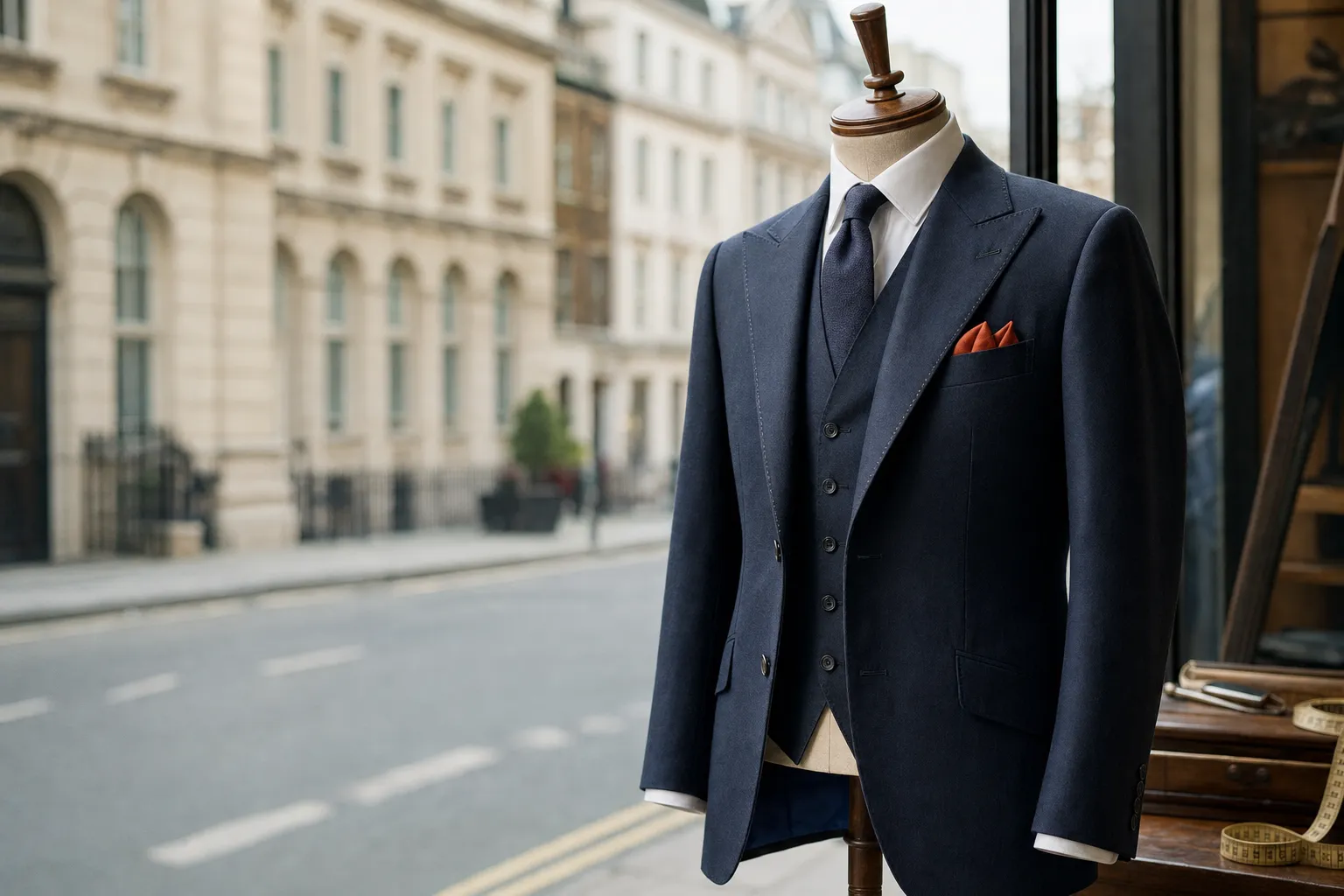
We produce personalised bespoke garments from our Clerkenwell studio in London by combining individual measurements, fabric selection and finishing choices to create suits and jackets that fit the wearer rather than forcing the wearer to fit the garment. In practice that means measured fittings, clear choices about fabric and construction, and finishing details such as lapel shape, lining and pocket style that reflect each client’s needs.
What we mean by bespoke personalisation
Bespoke personalisation is more than choosing a cloth and a button. It is the process of adapting cut, construction and small details to the person who will wear the garment. At Dress2Kill we treat personalisation as three connected choices: fit, fabric and finish. That combination is what makes a suit feel like it was made for you, not taken off a rail.
We work with men and women, grooms and wedding parties, theatre companies and professionals building a business wardrobe. Our bespoke personalisation covers everything from morning suits and dinner jackets to tailored ladies jackets. If you want to explore the subject in depth, our dedicated guide on the topic explains the wider considerations for bespoke personalisation.
Read our detailed guide to bespoke personalisation for examples of personal choices and illustrative case studies.
How the process works at our Clerkenwell studio
We begin with an in-person consultation and end with a finished garment that has passed our quality checks. The process is designed to protect fit and to let you make informed choices at each stage.
- Consultation and style brief. We talk through how you intend to wear the garment, the dress codes involved, and the details you prefer, such as lapel shape, vents, collar styles and pocket types.
- Measurement and posture review. Accurate measurements are taken standing and seated, and we note posture, shoulder slope and any asymmetry that affects fit.
- Fabric selection. We present cloth options suitable for the season and the purpose of the garment, explaining weight, weave and performance characteristics.
- First fitting with a basted garment. A minimally finished toile or basted canvas is used to check lines and proportion. This is where we refine shoulder fit and balance.
- Follow up fittings. Additional fittings refine sleeve length, waist suppression and trouser break. For complex commissions we schedule multiple fittings.
- Finishing and final quality check. We attach the chosen lining, buttons and finish the stitching. Each garment is inspected for seam alignment, button spacing and press quality before collection.
Choosing fabric and construction for personalisation
Fabric and construction determine how a suit will drape, how long it will last and how it behaves in daily wear. We explain the practical differences so you can make choices that match your needs.
Fabric essentials
- Wool weight and weave, which affect warmth, crease resilience and drape.
- Blends and performance cloths for travel, which resist creasing and return to shape faster.
- We recommend cloths appropriate for the season and the intended use of the suit.
Construction options
Construction sits on a spectrum from fully canvassed, which gives the best long term shape, to fused, which is lighter and less costly. For garments where structure and longevity matter, such as a business suit or a wedding suit, we favour canvassed or partially canvassed methods because they hold the lapel roll and chest shape better over time.
For more on how fabrics influence outcomes, see our topic on suit fabrics.
Pro tip: Choosing a lining colour that contrasts slightly with the cloth gives a personalised look without changing the garment’s formality. A strong lining colour is a subtle way to personalise a wedding waistcoat or a dinner jacket.
Common personalisation choices and what they mean
We list the options clients ask about most, and explain why each matters for fit and style.
- Lapel style and width. A narrow lapel reads contemporary, a wider lapel reads traditional. Lapel roll and width change the perceived shoulder breadth.
- Button stance and number of buttons. The button placement affects torso proportion. We recommend stances based on body shape and posture.
- Pocket types. Patch pockets give a relaxed look, flap pockets are versatile, and jetted pockets are formal.
- Vents and jacket length. Vents control movement and sitting comfort. Jacket length affects balance with trouser lines.
- Waistcoat options. Single or double breasted waistcoats alter formality and the suit silhouette.
What to expect at fittings and how to prepare
Fittings are where personalisation becomes tangible. Coming prepared saves time.
What to bring
- A pair of shoes with the heel height you normally wear.
- Shirts you commonly use, especially for collar and cuff fit considerations.
- Reference photographs or examples of styles you like.
During the first fitting we look at balance and shoulder line. Later fittings refine sleeve length, trouser rise and waist suppression. We encourage clients to move, sit and walk during fittings so the fit is tested under natural conditions.
Watch out: Avoid assuming your usual ready to wear size will translate directly to a bespoke cut. Measurement and posture differences mean bespoke sizes are personalised and often differ from off the peg labels.
Decisions where professional judgement matters
Our role is to guide the technical choices that affect silhouette and wearability. Those judgments include shoulder construction, canvas depth, and how much suppression to add at the waist. These are not cosmetic tweaks; they alter how the garment moves with the body.
We will always explain trade offs, for example the difference between a very soft shoulder and a structured shoulder for someone who sits for long periods, or the maintenance implications of a lighter performance cloth versus a traditional worsted wool.
For a deep dive on fit concerns and why they matter, visit our topic on suit fit.
How we handle wedding commissions and group orders
When preparing tailored wedding suits or morning suits we plan timelines and fittings around the wedding date to ensure there is time for final adjustments. For groomsmen and group orders we manage consistent styling while accommodating individual fit differences.
See our service page on Tailored Wedding Suits for typical timelines and what we recommend for group measurements.
Key takeaway
Bespoke personalisation at Dress2Kill in Clerkenwell is a process designed to secure fit, function and personal expression through measured fittings, fabric choice and considered construction. The value is in decisions made at each stage, guided by experienced tailors, to ensure the finished suit behaves as you expect in real life.
Frequently asked questions
How long does a bespoke personalisation commission usually take?
Lead times vary with complexity and season, but a standard bespoke suit commission includes an initial consultation, one or two fittings and a finishing period. For wedding commissions we advise starting early to allow time for group fittings and any unexpected adjustments.
Can we choose a specific lining, button and monogram?
Yes, those finishing options are a central part of personalisation. We present the available linings, button choices and monogram styles during your consultation so you can choose combinations that suit the occasion and your wardrobe.
What is the difference between bespoke and made to measure?
Bespoke begins with a paper pattern cut to the individual measurement and posture, and usually involves more canvas work and multiple fittings. Made to measure adapts a standard pattern to measurements with fewer alterations. We offer both routes depending on the client’s needs and the desired level of refinement.
Do you work with clients across London or only in Clerkenwell?
We are based in Clerkenwell and serve clients across London. In-person consultations and measured fittings take place in our studio, which allows us to maintain the quality controls needed for complex personalisation.
Learn more and find us on Google
To see recent customer feedback, directions and our listing, check our Google Business Profile. You can also explore more topics and services on our site to learn how we approach bespoke suits and tailoring in London.