
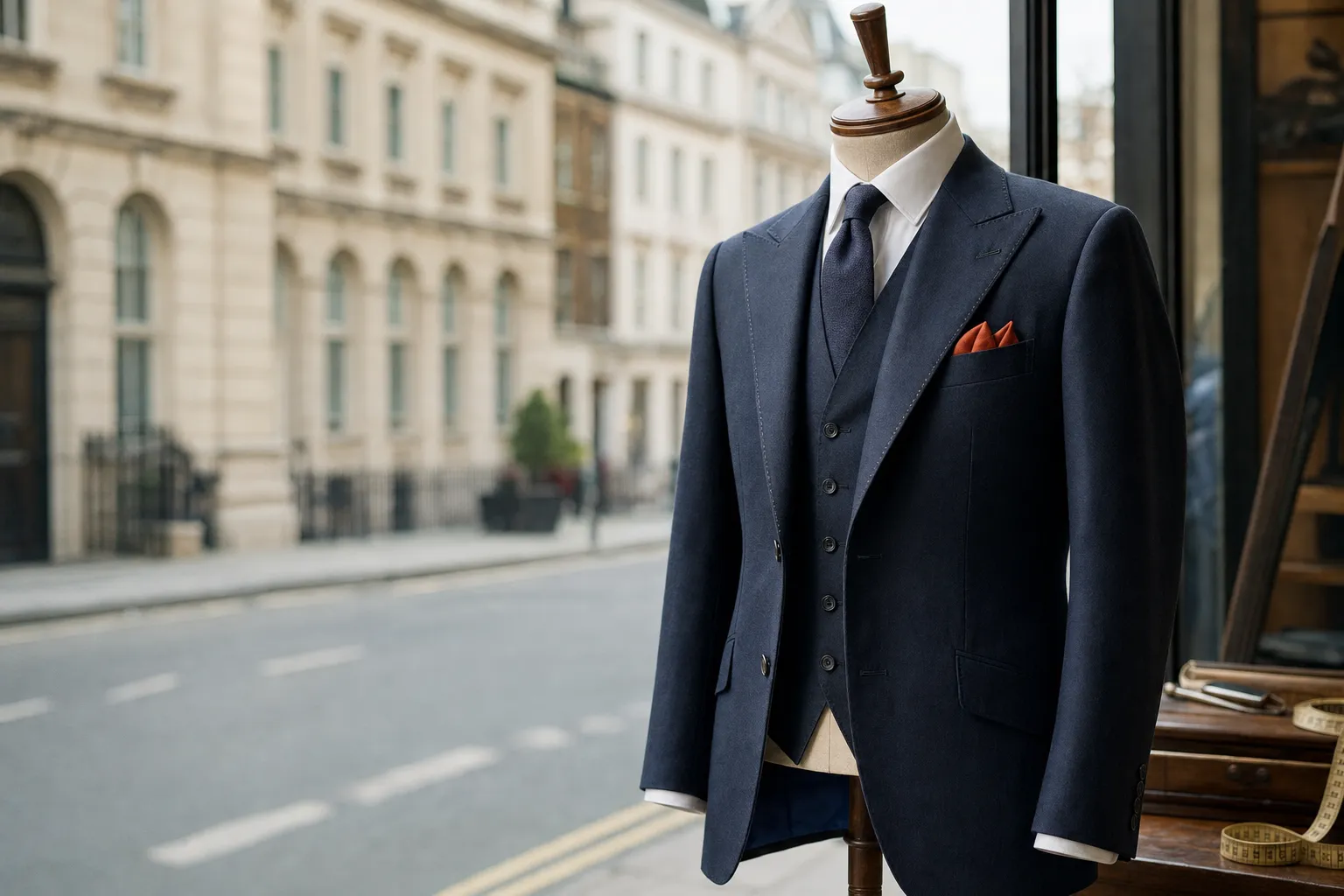
Bespoke suits feel more complicated than you expect because each measurement, fabric choice and finishing decision changes the pattern and the number of fittings. In plain terms, bespoke tailoring is a series of careful choices, not a single purchase, and those choices determine how long the work takes and what it costs.
Why bespoke feels more complicated than ready to wear
We encounter customers who expect a single price and a single visit. Bespoke does not work like ready to wear. With a bespoke suit we design a unique pattern for your body, select the right materials and then refine the garment over several fittings. That personalisation is what makes a bespoke suit fit and wear better, but it also adds steps and decisions.
In practice the complexity shows up as:
- More measurement points than off the peg garments, because we draft a pattern from scratch.
- Multiple fittings to adjust balance, sleeve length and seat so the suit moves with you.
- Choices about construction, such as full canvas or fused front, that change durability and feel.
- Decisions on lining, shoulder style, lapel roll and hand finishing that take skilled labour.
What specifically adds time and cost
Not all bespoke suits are equal. Small choices add little, and others change the workshop time significantly. These are the main drivers we explain to clients in the City of Westminster.
- Pattern drafting. Drafting a unique paper pattern from your measurements and posture is skilled work and cannot be rushed.
- Fabric and availability. Cloth quality, rarity and width affect how much usable yardage we need and whether we must order from a mill.
- Construction method. A full canvas chest requires more handwork than a fused front and costs more in labour and time.
- Hand finishing. Hand stitched buttonholes, pick stitching and hand-sewn linings extend workshop hours but improve the suit's look and longevity.
- Number of fittings and alterations. Complex posture or a desire for a very slim fit often needs extra fittings and small pattern changes.
- Personalisation and detailing. Custom linings, contrast buttonholes and bespoke pockets are personal touches that add time.
Our process and where complexity appears
We explain our typical workflow so you can see where decisions influence cost and timing. This overview helps you understand estimates and what a fair quote covers.
- Consultation and brief. We talk through occasion, preferred silhouette and fabric families. This briefing sets the direction for pattern drafting.
- Measuring and posture analysis. Beyond chest and waist, we record shoulder slope, arm length, spine alignment and stance. Those details change the paper pattern.
- Pattern drafting and first cutting. We make a bespoke paper pattern and cut the basted toile or fusing sample. This step is where body asymmetries are addressed.
- First fitting and adjustments. The initial fitting shows how the garment hangs. We mark changes on the toile, and the pattern is altered accordingly.
- Final construction and finishing. Once the pattern is proven, we cut the final cloth and finish the suit, including lining and buttonholes. Hand finishing is applied where specified.
Pro tip: If you have a specific event date, tell us early. Fabric ordering and additional fittings add lead time, and planning helps keep delivery on schedule.
How fabric and construction choices influence the result
Fabric and construction are the two areas that most alter how a suit looks, feels and lasts. We guide clients through trade offs so they can choose what matters most to them.
Fabric choices affect drape, crease recovery and weight. Wools have different cloth counts and finishes, and silk blends change sheen. Construction choices affect shoulder shape, chest support and the way the lapel rolls. For background reading on what bespoke tailoring means, see the historical definition on Wikipedia.
Key decisions we discuss with every client
- Fabric family and mill provenance
- Full canvas or partial canvas construction
- Shoulder style and padding level
- Lapel width, shape and roll
- Number of pleats, vents and pocket styles
Common misconceptions we correct
Customers often arrive with expectations shaped by a single conversation or an off the peg purchase. These are the frequent misunderstandings we clear up.
- One measurement is enough. No. Multiple measurements and a fitting or two are usually necessary for a truly bespoke fit.
- All bespoke suits are identical in price. No. The level of handwork, fabric choice and number of fittings create a wide price range.
- Bespoke is only for men. We make bespoke and tailored ladies jackets and suits for women just as carefully as for men.
- Alterations are the same as fittings. Alterations correct a finished garment. Fittings are used to refine the pattern before a final suit is made.
Watch out: Long lead times and changes late in the process can increase cost. If you plan a wedding or event in Westminster, allow extra time for ordering cloth and scheduling fittings.
Practical tips for reducing surprises
We want your experience to be predictable. These practical steps reduce the chance of unexpected extra work.
- Bring reference garments that fit how you like, so we can see your preferred balance and silhouette.
- Decide how important longevity is compared with cost. Full canvas and natural fibres last longer but cost more up front.
- Be decisive about linings and personalisation early. Late changes often require remaking parts of the suit.
- Expect two to three months lead time for a fully bespoke garment when cloth needs ordering.
Key takeaway
Bespoke tailoring is intentionally detailed. The more you personalise fit, cloth and construction, the more pattern work, fittings and hand finishing are required. That is why bespoke suits take longer and cost more than off the peg options, and why the result is a garment made to move with your body.
Related services and further reading
For a simpler comparison of how cost changes with choices, see our guide to Bespoke Suit Cost. To learn how bespoke compares with other formalwear we make, read about our Tailored Wedding Suits. If you are visiting us in person, details of our studio and how we work across London are on our Locations page.
For official guidance on textile labelling and fibre names see the UK Government page on textile labels. For technical notes on wool and fibre performance, the Woolmark technical guides are useful references.
Frequently asked questions
How much does a bespoke suit usually cost in Westminster?
Costs vary because of cloth, construction and the number of fittings. Rather than a single figure, bespoke pricing reflects the choices you make. See our topic page on Bespoke Suit Cost for a breakdown of typical cost drivers.
How many fittings will I need?
Most clients need two to three fittings: an initial toile fitting and a final fitting after the suit is cut in cloth. Complex posture or extensive personalisation can require one extra fitting.
What is the difference between full canvas and fused construction?
Full canvas construction uses layers of interlining shaped by hand and stitched to the jacket, which improves drape and longevity. Fused construction bonds interlining to the cloth and is quicker to produce. The two methods feel different and have different maintenance and lifespan characteristics.
Can you make a wedding suit and a morning suit at the same time?
We make tailored wedding suits and morning suits and coordinate deliveries where schedules allow. Each style has its own construction and fabric recommendations, which we discuss during the consultation.
How long should I allow for delivery for an occasion?
Allow extra time if you want rare cloth, heavy personalisation or multiple fittings. Typical lead times for bespoke work that requires ordering cloth are several weeks to a few months. Tell us the event date early so we can advise realistically.
Find our studio details and reviews
Check our Google Business Profile to read recent reviews and get directions to our London studio. To learn more about pricing and what affects bespoke cost, start with our Bespoke Suit Cost topic and our Bespoke Suits service page.
Read our Google reviews and get directions on our Locations page