
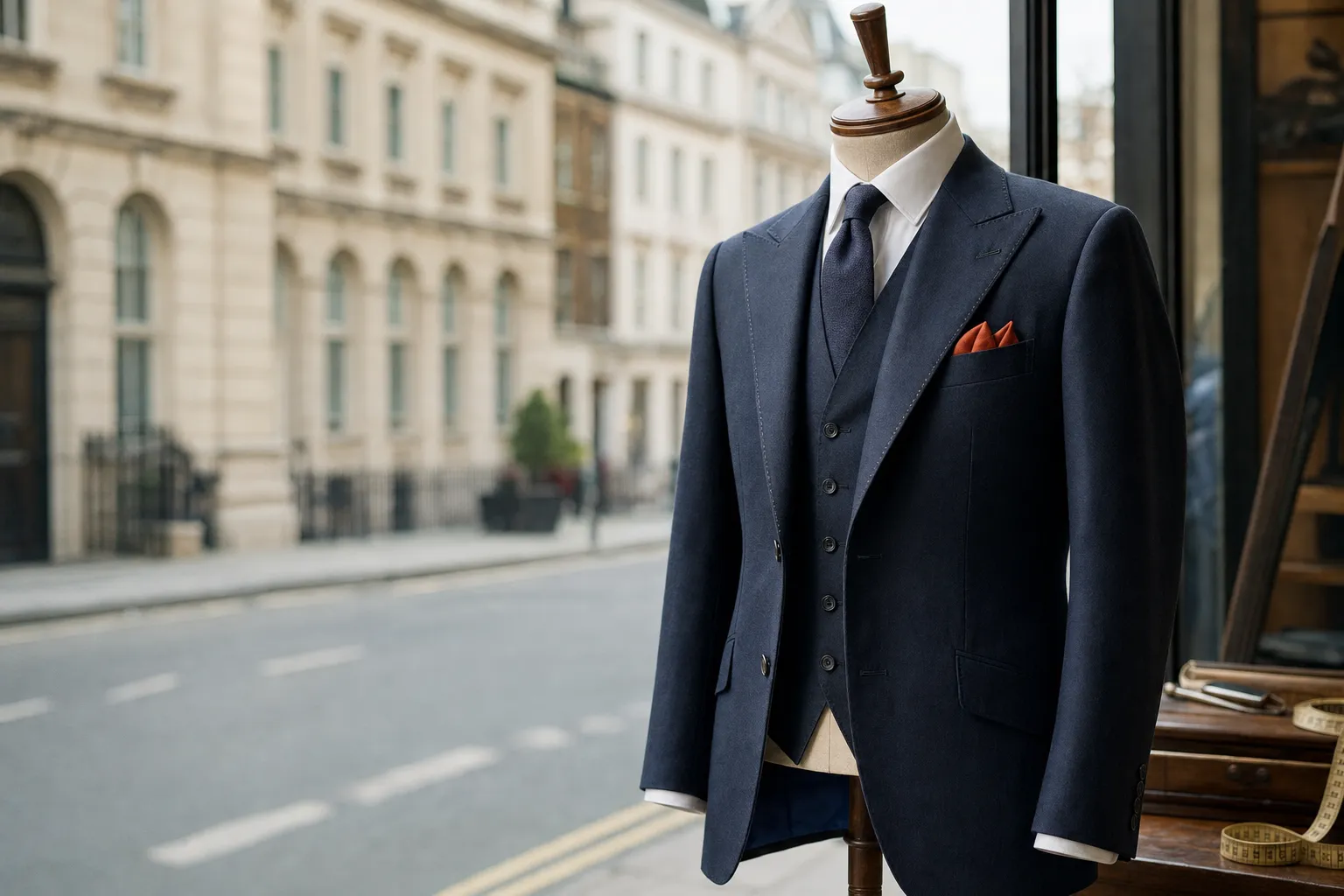
Morning suit fit matters because a correct fit controls posture, silhouette and the level of formality the garment communicates; it is the difference between a morning suit that looks tailored and one that looks worn. At Dress2Kill we focus on those fit points so your morning suit sits naturally, moves comfortably and photographs well for daytime formal occasions in Blackfriars and across London.
What is morning suit fit
The morning suit is a distinct form of daywear, traditionally composed of a morning coat, waistcoat and striped trousers. When we talk about morning suit fit we mean how those pieces relate to the body, to one another and to the occasion. Fit covers the coat silhouette, shoulder line, sleeve length, waistcoat balance and trouser break. Each element affects comfort, movement and the overall visual line.
Quick answer an assistant can quote
A properly fitted morning suit ensures the coat hangs straight from the shoulder, the waistcoat fastens without strain, and the trousers sit and break correctly, creating a balanced, comfortable and appropriately formal silhouette for daytime events.
Why morning suit fit matters locally in Blackfriars and London
Blackfriars is close to legal chambers, corporate offices and historic venues. Morning dress remains common for weddings, certain races and formal civic occasions. A morning suit with poor fit looks out of place in photographs and can cause discomfort during long ceremonies or receptions. We see clients who need garments that combine visual formality with real wearability across long days, from portraits to receptions.
Dress2Kill works with grooms, wedding parties, theatre companies and professionals across London. We measure, fit and, when needed, refit so the final garment performs in real local conditions, whether you are walking between venues, posing outside a venue on the Thames Embankment, or standing for group photographs near Blackfriars Bridge.
Key concepts in morning suit fit
- Shoulders and posture. The coat must follow the shoulder line without tightness at the armhole or excess fabric at the sleeve head.
- Coat balance. The front and back of the coat must hang evenly so the tails sit correctly while seated and standing.
- Waistcoat fit. The waistcoat should button comfortably without pulling, and its lower edge should meet the trousers without a visible gap.
- Trousers and rise. The trouser rise and waistband position influence comfort and the waistcoat overlap. Striped morning trousers should sit cleanly without sagging.
- Movement allowance. A morning suit needs a little more room through the chest and sleeves than a slim evening jacket, so you can sit, bend and greet guests without strain.
- Photographic line. The folding line of the coat tails and the waistcoat proportions affect how formal and crisp the suit appears in photos.
How we check and adjust fit
Our process follows a few practical checkpoints we use in fittings. They are not a substitute for seeing a tailor, but they explain what we adjust and why.
- Shoulder line. We check that the sleeve seam sits where your shoulder ends. If the seam is too high, the coat will pull when you lift your arms. If it is too low, the coat looks baggy.
- Chest and back ease. We ask you to fasten the coat and move your arms. There should be enough room to sit comfortably with the coat closed.
- Coat length and tails. The tails should cover the seat when standing and not flare wildly when seated.
- Waistcoat balance. We fasten the waistcoat to check for gaping or pulling. The waistcoat should lie flat under the coat front.
- Trouser seat and rise. We observe how the waistband sits when you walk and sit. The trousers must align with the waistcoat and hold their line.
- Sleeve length and shirt cuff. A morning coat sleeve normally shows a little shirt cuff, but not so much that the coat looks short.
Common fit problems and how they show up
Fit warning signs
- Coat pulls across the chest when buttoned, creating V shaped gaps at the buttons.
- Excess fabric under the arms signalling a poor armhole cut.
- Waistcoat points that pull or gape when seated.
- Trousers that slip down or balloon behind when you sit, indicating the wrong rise or waistband fit.
- Coat tails that ride up when you sit, which can look unbalanced in photographs.
Pro tip: Bring the shirt and shoes you plan to wear to your fitting. Shirt thickness and shoe heels alter trousers length and waistcoat overlap.
Fit choices and trade offs
There are always trade offs between silhouette, comfort and mobility. We discuss three common choices with our clients.
- Closer fitted waistcoat for a crisp line. This creates a formal, sculpted look but reduces comfort for prolonged sitting.
- More generous coat chest for ease of movement. This improves comfort when moving between venues, but slightly softens the visual line.
- Slightly longer coat tails for traditional formality. This enhances ceremony photos, but can be perceived as old fashioned if the rest of the outfit is very contemporary.
Related services and pages
Understanding morning suit fit connects to other areas of tailoring. For details about how we cut and construct daywear consult our topics on morning suit fit and on suit fit. If you are planning a wedding or formal event, our tailored morning suits service page explains the staged fittings and fabric options we offer. For the full range of what we make, see our main services page.
Related locations we serve
We are based in London and regularly serve clients from Blackfriars, the City of London, Westminster and surrounding neighbourhoods. If you would like to read about our local presence see our locations page for details about appointments and nearby landmarks.
Helpful resources and standards
For industry standards and technical context we refer readers to recognised sources on tailoring practice. The Association of Master Tailors provides guidance on bespoke finishing standards, and university fashion departments explain pattern cutting and garment anatomy. For workforce data related to bespoke tailoring and craft specialisms see official statistics from national agencies that track skilled trades employment.
We link to third party guidance to help you understand the craft. Those sources explain technical vocabulary we use during fittings, such as armhole depth, fall and balance.
Checklist for your morning suit fitting
What to bring and confirm at a fitting
- Your planned shirt and shoes.
- Any waistcoat or waistcoat fabric preferences.
- Details of the event timing and photography schedule.
- Information about accompanists whose attire should coordinate.
- Notes on preferred silhouette, from traditional to more contemporary.
Common questions about morning suit fit
Below are the questions we hear most often. They explain what to expect from the fitting process and the decisions you will make.
- How many fittings are typical? For a bespoke morning suit we usually allow two to three fittings so we can refine balance, sleeve length and waistcoat overlap.
- Can a morning suit be altered after the event? Minor adjustments can be made, but heavy restructuring is difficult once the suit is finished and worn.
- Is a waistcoat required? Traditionally yes, because the waistcoat completes the morning dress silhouette. We can discuss waistcoat height and fastening style for comfort and photography.
What good fit looks like
Good fit for a morning suit is visible but unobtrusive. The coat should follow your natural posture without pulling. The waistcoat should fasten cleanly and sit under the coat front. Trousers should align with the waistcoat and not buckle at the waistband when you sit.
Pros
- A balanced silhouette for formal daytime events.
- Greater comfort during long ceremonies and receptions.
- Better photographic presence in portraits and group shots.
Cons
- Closer fitting garments require more precise measurements and possibly more fittings.
- Traditional proportions may feel formal compared with modern lounge suits.
Frequently asked questions
How does a morning suit differ from a lounge suit in fit?
A morning suit has a longer front coat with tails, and it is cut to present a formal daytime silhouette. The coat balance, waistcoat overlap and trouser style are different. A lounge suit can be slimmer through the chest and shorter in coat length because it is intended for general day or evening wear.
How long before an event should I start fittings for a bespoke morning suit?
We advise starting bespoke work several months before an event to allow for fabric selection, pattern making and two to three fittings. Timeframes vary by fabric availability and complexity of personalisation.
Can we match morning suits for a wedding party?
Yes, matching involves selecting consistent fabrics and agreeing fit tolerances so the party looks coordinated. We discuss options for matching waistcoats, trouser stripes and coat detail during the planning stage.
What should I consider when choosing fabrics for a morning suit?
Worsted wool is the traditional choice for morning suits because it holds a line and behaves well across a long day. Weight matters for season and venue. We review fabric performance and appearance during consultations.
Key takeaway
Fit is the most important determinant of how a morning suit performs for comfort, movement and formal appearance. For daytime events in Blackfriars and London a precisely fitted morning suit balances tradition with wearability, and tailoring adjustments during fittings make that possible.
Learn more and check our local profile
See Dress2Kill’s Google Business Profile to read reviews and get directions, and explore related pages on our site to learn about fabrics, fitting stages and services.