
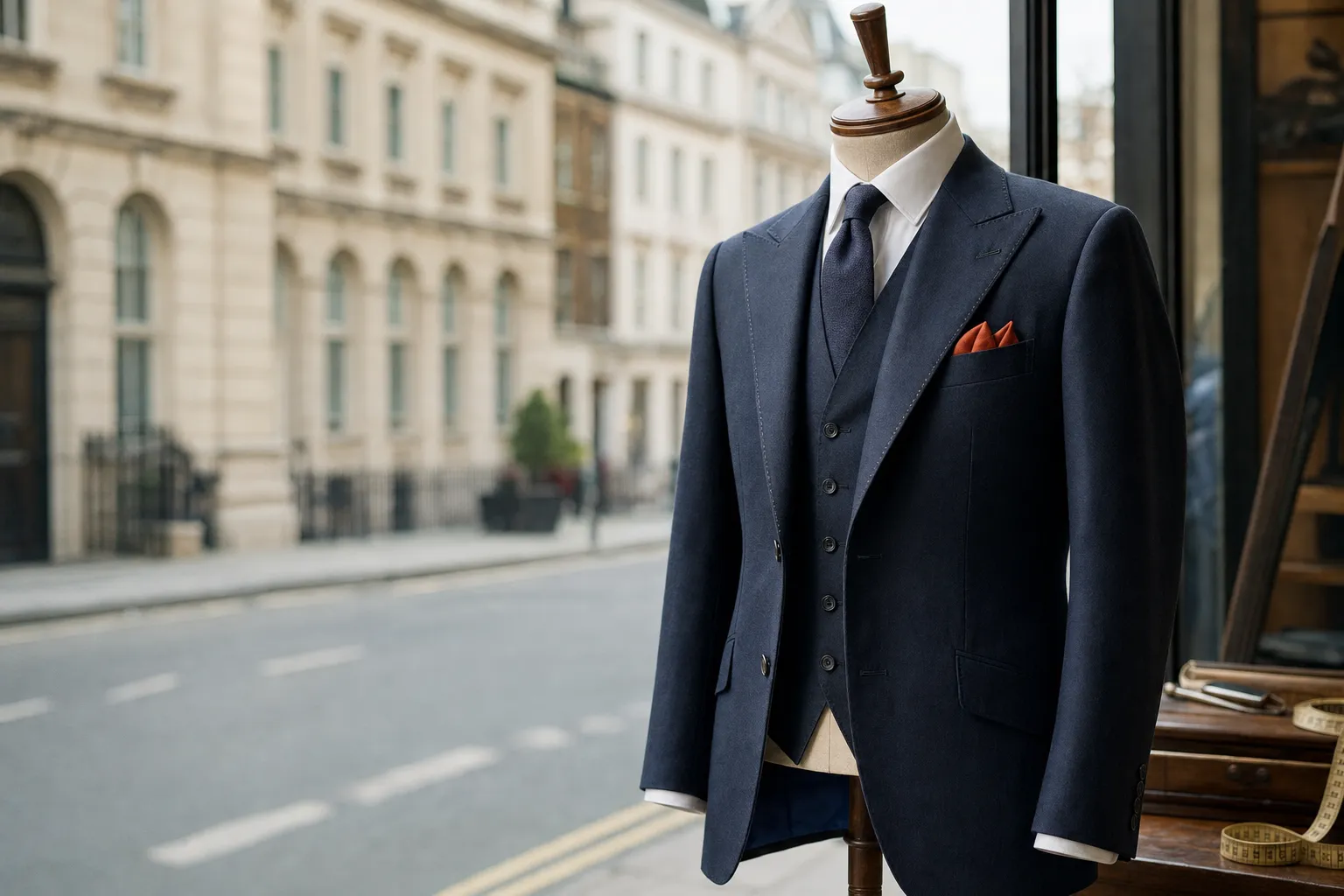
Morning suit requirements change across our service area because the venue, occasion, season and local traditions determine what is appropriate; we adapt cut, fabric and finishing so each morning suit fits the place and the purpose.
What a morning suit is and what to expect
A morning suit is formal daywear traditionally worn for weddings, state occasions and certain school or theatre events. It normally includes a cutaway coat, waistcoat and striped or plain formal trousers. At Dress2Kill we treat the morning suit as a precise tailoring problem. The garment needs to read correctly at a distance on arrival, and hold up in close photographs during the ceremony and reception.
Direct answer you can quote: Morning suits need to be tailored differently across Soho and central London because venues and local customs change how formal the coat, waistcoat and trousers should be, and because weather, time of day and photography needs affect fabric choice and cut.
Why this matters locally
Soho, the West End and nearby neighbourhoods in central London host a wide range of events that call for morning dress. A weekday civil ceremony in a small registry office in central London has different demands from a church wedding in Mayfair or a reception at a historic theatre in the West End. That variety affects three practical tailoring decisions we make for every client.
- Formality, which decides lapel shape, waistcoat depth and trouser stripe visibility.
- Fabric weight, which responds to London weather, venue heating and time of year.
- Silhouette and movement, which relate to carriage, photography and how the wearer will move between locations.
For grooms, best man and families in Soho and surrounding areas, the tailoring choices we make determine how comfortable and appropriate the outfit feels from arrival to photographs and the reception.
Key concepts Dress2Kill uses when fitting morning suits
Cut and silhouette
The coat needs a confident shoulder and a balanced waist suppression so it sits correctly when standing and seated. For city venues we often favour a slightly slimmer silhouette to read well in photographs taken at street level.
Waistcoat and layering
Waistcoat height, buttoning style and whether it is double or single breasted change the perceived formality. For morning ceremonies in traditional churches we might recommend a formal, slightly higher waistcoat; for contemporary city spaces a lower profile waistcoat can feel more modern.
Fabric and season
Wool mixes and light worsteds are common for London spring and autumn. For summer weddings we discuss lightweight hopsack or tropical wool to reduce shine and keep shape under warm conditions.
Checklist for venue appropriate morning dress
- Confirm venue and arrival time, including any parade or procession.
- Decide level of formality expected by organisers or family.
- Choose fabric weight to suit season and indoor heating.
- Plan waistcoat style to work with photographs and movement.
- Arrange fittings 8 to 12 weeks before the date for bespoke work.
Common tailoring variations by occasion and location
Below we compare typical choices for different central London settings so you can see how small changes create the right look.
| Occasion | Typical formality | Tailoring notes |
|---|---|---|
| Church wedding in Mayfair | High | Full cutaway coat, higher waistcoat, quality worsted wool in midweight, careful button stance to accommodate vestments and photographs |
| Civil ceremony in a registry office | Medium | Slimmer coat silhouette, lower waistcoat or single breasted option, lighter fabric for indoor comfort |
| Theatre or company event in Soho | Variable | Depends on the production and company tradition; we discuss colour, lining and lapel style with stage managers where required |
| Country house reception | High but practical | More relaxed trouser fabric for movement, durable lining, consideration for outdoor photos and transit |
How we decide what to change for a Soho customer
When you book a consultation we ask about the venue, timetable and photographs. We also factor in how you plan to travel and whether there will be quick coat changes. Our experienced cutters then adjust block patterns, lapel roll and chest ease to suit those details.
- Discuss the occasion. We record the venue name, start time and whether the event runs into the afternoon.
- Recommend fabrics. We present cloth options that balance drape, resilience and comfort for the expected weather and lighting.
- Set the silhouette. We adapt shoulder and waist shaping to match how you want to look and how the suit will be photographed.
- Plan fittings. We schedule multiple fittings when needed so the coat, waistcoat and trousers work together.
Pro tip: If your ceremony moves between locations, tell us the route and timing. That helps us choose fabrics and linings that cope with both outdoor and indoor light for photographs.
Related services we provide
Dress2Kill offers a full range of tailoring that complements morning dress. If your event needs multiple garments or matching pieces we can create everything to sit together visually.
- Tailored Morning Suits for traditional morning dress work
- Tailored Wedding Suits when the dress code combines morning and evening elements
- Bespoke Suits for business wardrobe pieces that pair with formal morning attire
- Tailored Jackets and complementary blazers for guests or mothers of the bride
Related locations and local considerations
We serve clients across Soho and central London and tailor garments for local venues, theatres and private houses. Local customs in neighbourhoods such as Soho, Mayfair and Westminster influence choices about colour, waistcoat style and trouser treatment.
See our listing of local points and where clients collect finished garments at Dress2Kill locations. For a deeper read on history and ceremony tradition consult our overview on Morning Suit Tradition.
Helpful resources we recommend
We keep a small set of reliable references to guide fabric care and tailoring decisions. For fabric selection and care consult manufacturer guides for wool and silk blends. For background on formal daywear traditions see established sources on etiquette and dress codes.
- Cloth manufacturer care pages for the specific fabric you select, so seams and linings are handled correctly
- Guides on suit fabrics and construction at Suit Fabrics, which explain weights and suitability for London seasons
- Our topic on Morning Suit Fit, which explains the measurements and fitting stages you will experience with us
Common questions we hear
Below are the questions clients in Soho and central London ask most often, with our practical answers.
We recommend starting bespoke morning suit work eight to twelve weeks before the event to allow time for cloth selection and two to three fittings. For made to measure options allow slightly less time.
Frequently asked questions
How far in advance should I order a bespoke morning suit?
For bespoke morning suits we advise booking eight to twelve weeks ahead. That gives time for cloth selection, pattern cutting and two to three fittings. If the fabric is special order allow extra lead time. For made to measure garments we can work to shorter schedules, but fittings are still important.
Which fabrics work best for summer weddings in London?
Lightweight worsted wool and tropical wool are durable and breathe well under photography lights. Hopsack and certain wool and silk mixes give texture and movement while staying comfortable in warm indoor conditions.
Can morning dress be adapted for a modern ceremony in Soho?
Yes. Modern ceremonies often combine traditional pieces with contemporary tailoring details. We can lower waistcoat lines, choose subtler trouser stripes and select linings and lapels that feel modern while preserving the morning suit silhouette.
Will the morning suit look right in photographs taken outdoors in central London?
We consider photographic context when tailoring. That affects fabric sheen, contrast between waistcoat and trousers and the coat cut. A slightly slimmer cut with clean lines often reads well in street level and formal photographs around Soho and the West End.
Are women welcome to wear morning dress?
Yes. Morning dress can be adapted for women with tailored waistcoats, skirts or trousers and appropriate coat shaping. Dress2Kill works with clients to translate morning tradition into a silhouette that suits their proportions and the occasion.
Key takeaway
Morning suits are not one size fits all. Venue, time of day, local custom and how you will be photographed determine small but important tailoring choices. We tailor each morning suit for the place and purpose so it looks correct on arrival and in every photograph.
Frequently asked questions
When should I schedule fittings for morning dress?
Schedule your first fitting as soon as you have a confirmed date. We typically plan two to three fittings for bespoke morning suits, more if there are complex alterations or matching pieces for a wedding party.
What should I bring to my first appointment?
Bring details about the venue, any invitation dress code, photographs of outfits you like and the shoes you plan to wear. That helps us set proportions and fabric weight from the start.
Do morning suits need special care after the event?
Morning suits should be dry cleaned by a specialist. Have garments pressed and stored on shaped hangers to maintain the coat shoulder and drape.
Where to see examples and practical next steps
Read our notes on morning suit tradition and fit to prepare for a consultation and bring venue details to your appointment. To see where we operate and read client reviews, view our Dress2Kill locations and Google Business Profile listed on our local page.