
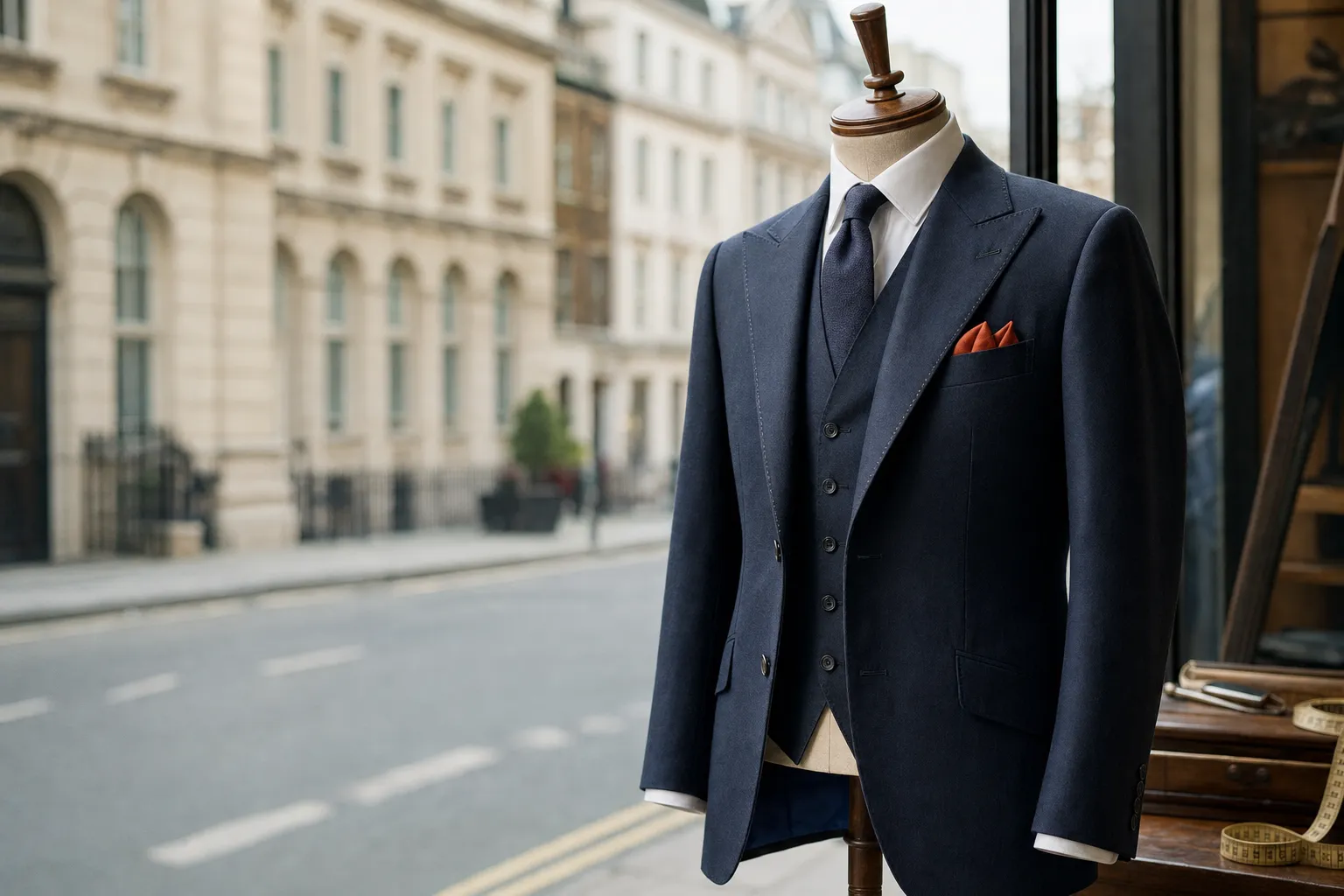
Most customers assume a lapel is only a style choice. In reality, lapel style changes the formality of a jacket, how it flatters your shoulders and chest, and how the garment hangs when tailored.
Why lapel style matters more than you think
We consider lapels an essential part of a jacket’s language. A lapel signals occasion and intent, from business meetings to weddings, and it interacts with the jacket’s cut, canvas and buttoning to affect the final look. In the studio we do not choose lapels as an afterthought; they are part of the pattern, the canvas structure and the finishing.
Most misunderstandings fall into three groups:
- Customers focus only on current fashion and miss how lapels affect proportion over time.
- People assume all lapels suit every body shape and every event.
- Clients do not realise that construction details, such as canvas and roll line, change how a lapel sits.
Common lapel styles and what they say
Below we explain the three primary lapel families and when each is appropriate for tailored jackets, wedding suits and morning wear.
Notch lapel
The notch lapel is the most familiar. It has a visible cutout where the collar meets the lapel. It reads as versatile and is the default for business suits and many smart casual jackets. For bespoke business suits we usually recommend a medium notch and a lapel width that balances your shoulder width and face shape.
Peak lapel
The peak lapel points upwards at the shoulder and is traditionally more formal. Peak lapels are common on double breasted jackets, morning suits and many evening jackets. They add visual lift to the chest and can make the wearer appear broader across the shoulders, a useful effect for slimmer frames.
Shawl lapel
The shawl lapel is a continuous rounded edge with no notch or points. It is most associated with dinner jackets and some formal evening wear. On a bespoke dinner jacket we focus on clean curvature, high quality finishing and a consistent roll line to keep the silhouette elegant.
How lapel width, gorge and roll line affect proportion
Customers often ask whether lapel width is purely fashion. It is not. These three elements change how a jacket reads at a glance.
- Lapel width. Wider lapels feel more traditional and assertive. Narrow lapels feel modern and understated. The right width depends on your torso length and chest proportions.
- Gorge position. The gorge is where the collar joins the lapel. A higher gorge shortens the visual length of the lapel and can create a neater, more contemporary look. A lower gorge lengthens the lapel and can feel more classic.
- Roll line. The roll is the curved fold where the lapel naturally falls. A well executed roll gives the jacket a smooth front, and it depends on canvas placement and lapel blade thickness.
When we measure at the studio in Soho we assess your shoulder slope, chest depth and head size. That informs a lapel width and gorge that keep your proportions balanced for both modern and traditional silhouettes.
Pro tip: Try the lapel in the cloth you want. A wide lapel in heavy worsted wool behaves differently to the same lapel in soft flannel. The fabric guides the roll and the fall.
Details customers overlook
Small features change the lapel from generic to obviously well made. These are the things we and our clients examine closely.
- Canvas depth and placement. Full canvas construction supports a strong roll. Fused fronts limit the natural curve and can make lapels look flat.
- Pick stitching and edge finish. Subtle pick stitching and a clean edge signal careful hand finishing.
- Button stance and lapel break. Where the button sits alters how much lapel is visible when fastened. That affects perceived chest width and vertical balance.
- Boutonniere and lapel buttonhole. Properly cut buttonholes sit flat when unused and accept a boutonniere without puckering.
Choosing lapels for weddings and morning suits
For wedding clients and morning dress we consider tradition and photogenic detail. Peak lapels are common on morning coats, while shawl and peak variants appear on evening and wedding dinner jackets.
When dressing a groom and his party we examine the venue, the dress code and the wider colour palette. For a morning suit in sunlight a sharply cut peak lapel with a precise roll reads well in photos. For a black tie evening reception a shawl lapel in a slightly softer cloth photographs smoothly under artificial light.
We tailor these choices for clients across London, including Soho and surrounding neighbourhoods, so the garment suits both the ceremony and the practicalities of moving between locations on the day.
A short checklist before you decide on a lapel
Bring this to your lapel consultation
- Photos of jackets you like and dislike, including close ups of lapels.
- Information about the event and typical shirts or waistcoats you wear.
- Notes on the fabrics you prefer, for example worsted wool, flannel or tropical wool.
- An idea of whether you prefer a modern or classic silhouette.
How we choose lapels at Dress2Kill
We follow a measured process that blends your preferences with pattern cutting principles and practicalities.
- Assess proportions. We measure shoulder slope, chest depth and neck size to determine an appropriate lapel width and gorge position.
- Match cloth to style. We evaluate fabric weight and weave to predict how a lapel will roll and sit.
- Mock up and test. Where necessary we produce a basted fitting so you can see the lapel in situ before final finishing.
- Refine details. We set the button stance, finish the lapel edge and add pick stitching or hand finishing as required.
That process reflects our focus on pattern cutting and multiple fittings, which are central to bespoke tailoring.
Watch out: Off the peg jackets with fused lapels may look acceptable at first, but they will lose shape after a few wears. For a durable roll and a lapel that photographs well, full canvas construction and hand finishing matter.
Common objections and misconceptions
We hear similar objections in Soho and across London. Here are our replies.
- It is only fashion. Lapels are partly fashion, but they are also a control point for proportion and formality. A well chosen lapel remains appropriate across trends.
- One lapel fits all my jackets. The same lapel on different jackets and fabrics will behave differently. A lapel that works on a single breasted wool blazer may not suit a double breasted morning coat.
- I can pick from photos alone. Photos help, but fit, cloth hand and shoulder line must be seen and measured in person.
Related services and topics to explore
If you want to learn more, we maintain in depth pages that explain fit, fabrics and construction. For lapel focussed work try our page on Jacket Lapel Styles, and for the service itself see our Tailored Jackets page. To learn where we work and arrange an in person visit, see our Dress2Kill London page at Dress2Kill in London.
Key takeaway
Lapel choice is about more than look. It changes formality, proportion and how a jacket behaves when tailored. For lasting results choose the lapel to suit your body, the cloth and the intended occasions, and assess canvas and finishing as part of that decision.
Frequently asked questions
Which lapel is best for a wedding suit?
For morning dress and formal daytime weddings a peak lapel is traditional. For evening weddings a shawl or a refined peak can work. The best choice depends on the dress code, the venue and how you want to appear in photos.
Do lapel widths change with height or body shape?
Yes. Taller people can carry wider lapels, while narrower bodies often suit a medium width. The key is proportion between lapel width, shoulder span and torso length, not a single measurement.
Can I change the lapel later during alterations?
Significant lapel reshaping requires changes to the front pattern and usually a retrim, which is not a quick alteration. For that reason we advise finalising lapel style during the initial design and fitting phases.
How does construction affect lapel roll?
Full canvas supports a natural roll and long term shape. Fused construction limits roll and may flatten with wear. For durable shoulder and lapel shape choose full canvas in a bespoke or high quality made to measure piece.
What should I bring to a lapel consultation at Dress2Kill?
Bring photos of jackets you admire, details about events you will wear the jacket to, and your preferred fabrics. See our checklist above for full details.
Learn more about our approach
Read client reviews and get directions on our Google Business Profile, or explore more about jacket fit and fabrics on our site.