
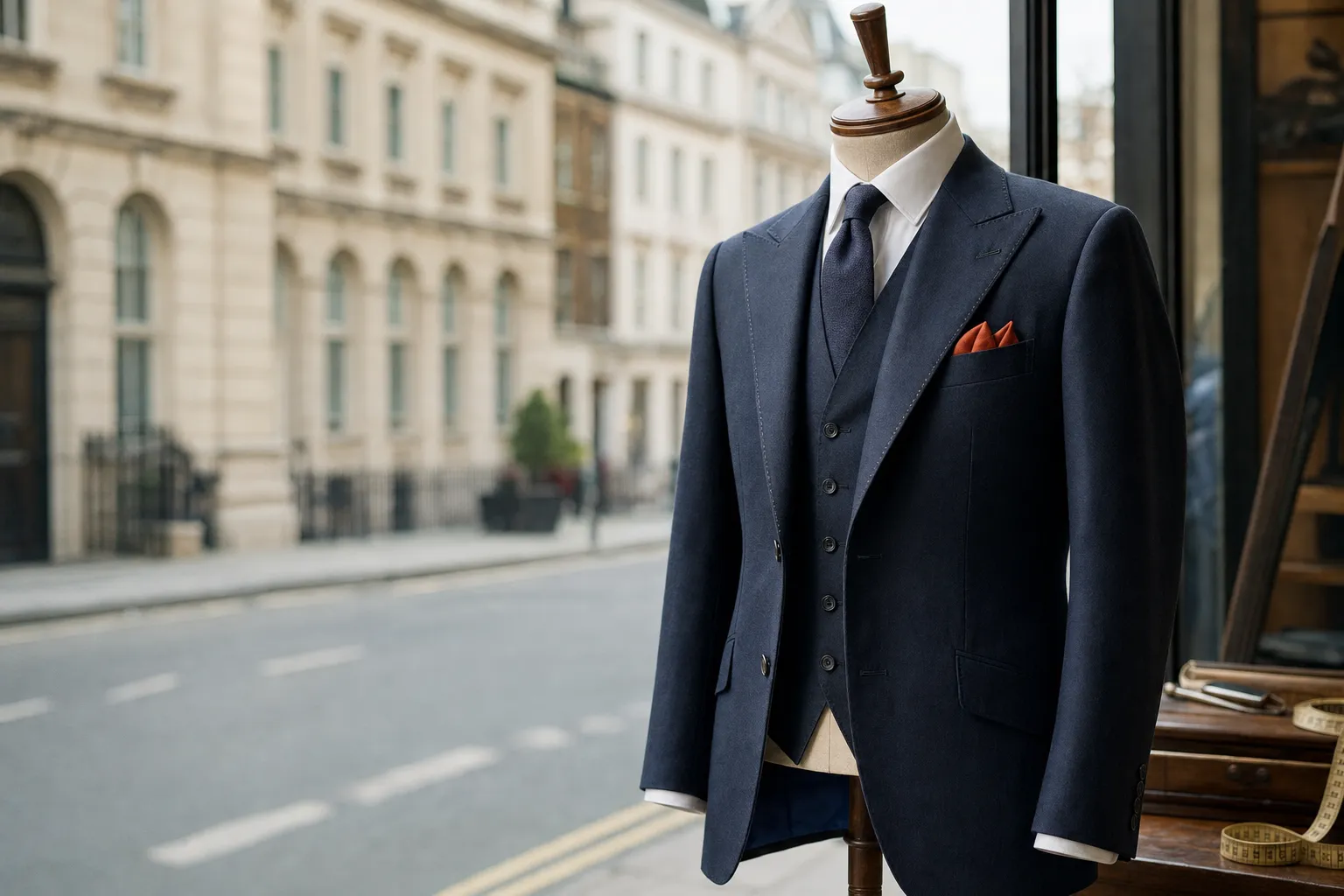
In the West End you will most commonly see three lapel styles on tailored jackets: notch lapels for everyday business and theatre calls, peak lapels for formal and wedding jackets, and shawl lapels on evening wear and dinner jackets. Choose the style that suits the occasion, your proportions and the fabric, and expect the lapel to be discussed early in a bespoke consultation.
Why lapel style matters
The lapel frames the face, affects the perceived shoulder line, and signals how formal a jacket is. In the West End, where clients attend theatre, corporate events, and weddings, the lapel is a small detail that has a large impact on the overall look.
We design lapels to work with body shape, collar height and the jacket’s intended use. That is why a single jacket pattern can be adapted with a different lapel to change its character from business to evening wear.
The three classic lapel styles and where you will spot them
Notch lapel
Notch lapels are the most common style for tailored business jackets and everyday blazers. You will see them on managers visiting theatres in the West End, on guests at informal receptions, and on tailored ladies jackets for workplace wear.
Characteristics of the notch lapel:
- A triangular cut where the lapel meets the collar.
- Range of widths from slim to traditional; narrow is more contemporary.
- Generally less formal than peak or shawl lapels.
Peak lapel
Peak lapels point upwards and are a sign of formality. In the West End, peak lapels are common on tailored wedding suits, morning suits and on jackets worn by theatre companies for opening nights and receptions.
Key notes about peak lapels:
- They visually broaden the shoulder and balance narrower faces.
- Common on double breasted jackets, morning coats and formal single breasted jackets.
- Width varies with fashion and the formality of the garment.
Shawl lapel
Shawl lapels offer a smooth, unbroken curve and are the traditional choice for dinner jackets and evening wear. In West End afterparties and black tie events you will often see shawl lapels in silk or satin facing.
- Elegant curve with no notch or point.
- Often combined with silk facing for a classic look.
- Perceived as the most relaxed of the formal lapels, suitable for black tie.
How lapel width and proportion affect the look
Lapel width should be proportional to the wearer’s face, shoulder line and the jacket’s lapel roll. In the West End we tailor these proportions to the client’s height, neck length and the occasion.
General rules we follow:
- Narrow lapels suit smaller frames and modern styles.
- Medium width is versatile for business and semi formal events.
- Wider lapels work with vintage inspired looks and broader shoulders.
Because trends change, we recommend choosing a proportion that will still look current in five years. When we make a bespoke jacket, the lapel width is recorded on the pattern so it can be repeated or adjusted for future garments.
How fabric and construction change how a lapel sits
Fabric weight, canvassing and interlining determine how a lapel rolls and lies against the chest. Lighter fabrics will create a softer roll, while a fully canvassed construction gives a lapel a clean, structured roll that lasts with wear.
Common pairings we use in London:
- Wool cloth with full canvas for a defined roll on business suits.
- Wool and mohair blends for a crisper edge on morning suits and formal jackets.
- Satin faced silk lapels for shawl and formal peak lapels on dinner jackets.
Pro tip: For wedding jackets and morning suits, choose a cloth that holds the lapel shape. If you want a softer, more relaxed roll, pick a lighter canvas and a finer wool.
Choosing a lapel for the occasion
The West End hosts a variety of events. Here is how we advise clients based on common occasions.
Business and theatre networking
Choose a notch lapel in a medium width for a professional, approachable look. A navy or charcoal cloth keeps the garment versatile for daytime and evening engagements.
Weddings and ceremonies
For a wedding day or formal ceremony, a peak lapel reads as more formal and photogenic. Morning suits traditionally use peak lapels, and a silk or grosgrain buttonhole facing is a classic detail.
Black tie and evening
Shawl lapels with satin facing are the established choice for dinner jackets. They photograph well under stage and event lighting common in the West End.
How we decide lapel style during a consultation
We start the conversation by asking where you will wear the jacket, and whether you want something timeless or contemporary. We assess posture, shoulder slope and face shape, then suggest styles that balance those proportions.
- Discuss the occasion. We clarify if the jacket is for business, a wedding, theatre or evening events.
- Assess proportions. We examine shoulder width, chest depth and neck length to recommend lapel width and peak height.
- Choose fabric and facing. Cloth weight and facing material shape the lapel roll and finish.
- Record details on the pattern. Every lapel width, buttonhole placement and facing choice is written onto the bespoke pattern for future reference.
Checklist before you confirm a lapel style
What to bring to your appointment
- An idea of the events you will attend in the jacket.
- Photographs of styles you like, including lapel close ups.
- Any reference jacket you already own for fit comparison.
Watch out: Avoid choosing a lapel solely because it is fashionable. A lapel that suits current trends may not flatter your proportions or be appropriate for every occasion. In bespoke work, the right choice balances style and long term wearability.
Common questions clients ask in the West End
We hear the same concerns from professionals, grooms and theatre clients. Addressing these early avoids surprises at final fitting.
- Will a wider lapel will look dated? Not necessarily, provided it is proportionate to your frame.
- Can a lapel be changed after the jacket is made? Minor changes are possible, but major redesigns involve remaking the jacket or significant alteration.
- Should lapel facing match the jacket cloth? For formal wear, a contrasting silk facing is traditional. For business jackets, a self facing is common.
What good tailoring looks like in a lapel
Good tailoring shows in the roll, the neatness of the edge, the symmetry between left and right, and in the buttonhole finishing. We spend time at the pattern cutting and canvassing stages to ensure the lapel rolls correctly and does not bulge at the throat.
When assessing work from any tailor, look for:
- Even roll and smooth transition at the collar.
- Clean, hand finished buttonholes that sit flat.
- Properly set sleeve and shoulder that complements the lapel line.
Seasonal and West End specific trends
The West End blends classic formality with theatrical flair. During wedding season we see more peak lapels and morning suits. For opening nights and after shows, clients choose richer fabrics and expressive lapel shapes that read well on stage and in photographs.
Fabric choices for the season also affect lapel appearance; heavier winter cloth gives a sturdier roll, while lightweight spring cloth softens the lapel line.
How to care for lapels and keep them sharp
Care prevents crushing and keeps the edge crisp. Regular airing after wear, careful storage on a shaped hanger, and professional pressing maintain the lapel line. For silk facings, steamer use is preferred over a hot iron.
For further reading on fabric behaviour and maintenance see our guidance on suit fabrics and on maintaining fit in our suit fit topic page.
Practical choices for common West End clients
Below are quick recommendations for typical Dress2Kill clients in the West End.
- Grooms and wedding parties: Peak lapel, medium to wide, with a silk or grosgrain facing for photographs.
- Young professionals: Notch lapel, slim to medium width in navy or charcoal for versatility.
- Theatre professionals and guests: Consider a structured peak lapel or a shawl for evening pieces that show well under lights.
When you commission a piece from Dress2Kill, these choices are discussed in the initial appointment and recorded on your pattern so we can reproduce or adjust them for future garments. For information about our tailored jacket service see our Tailored Jackets page, and for our locations and how we serve the city and surrounding areas see the Locations page.
How to prepare for your lapel decision without doing it yourself
We do not recommend trying to alter lapels at home. Instead, bring images, note the events you plan to attend, and try on reference jackets to show your tailor how you want the lapel to sit. That way, we use professional pattern cutting and fitting to achieve the result.
- Gather inspiration. Photos from magazines or theatre costumes help explain the look you want.
- Discuss use cases. Tell us if the jacket needs to work across business, wedding and evening roles.
- Trust the fitting process. Multiple fittings let us refine the lapel roll, width and facing choice so the finished jacket performs as intended.
Key takeaway
Lapel style is a small design decision with big visual consequences. In the West End, choose a lapel that matches the occasion, suits your proportions and is supported by the jacket’s construction. When you commission a bespoke jacket, a tailored consultation ensures the lapel is planned, recorded and executed so it looks and wears correctly.
Frequently asked questions
What lapel should I choose for a daytime wedding in the West End?
For daytime weddings we usually recommend a peak lapel for a formal appearance, or a medium notch lapel if the dress code is semi formal. Fabric choice and facing will also affect the final character of the jacket.
Can lapel width be changed after the jacket is made?
Minor adjustments may be possible but significant width changes are difficult without remaking the jacket. That is why we finalise lapel width at the pattern and fitting stages.
Are shawl lapels only for dinner jackets?
Shawl lapels are traditional for dinner jackets and evening wear, but they can be used on contemporary blazers. We advise considering the overall outfit and event before choosing a shawl lapel.
How do I know if a peak lapel will suit my face?
Peak lapels broaden the shoulder line and suit narrower faces or taller frames. During a fitting we assess posture and proportions and can show the effect before finalising your jacket.
Find out more and read reviews
Check our Google Business Profile for directions, opening details and customer reviews, then read more about jacket lapel styles and related tailoring topics on our site.