
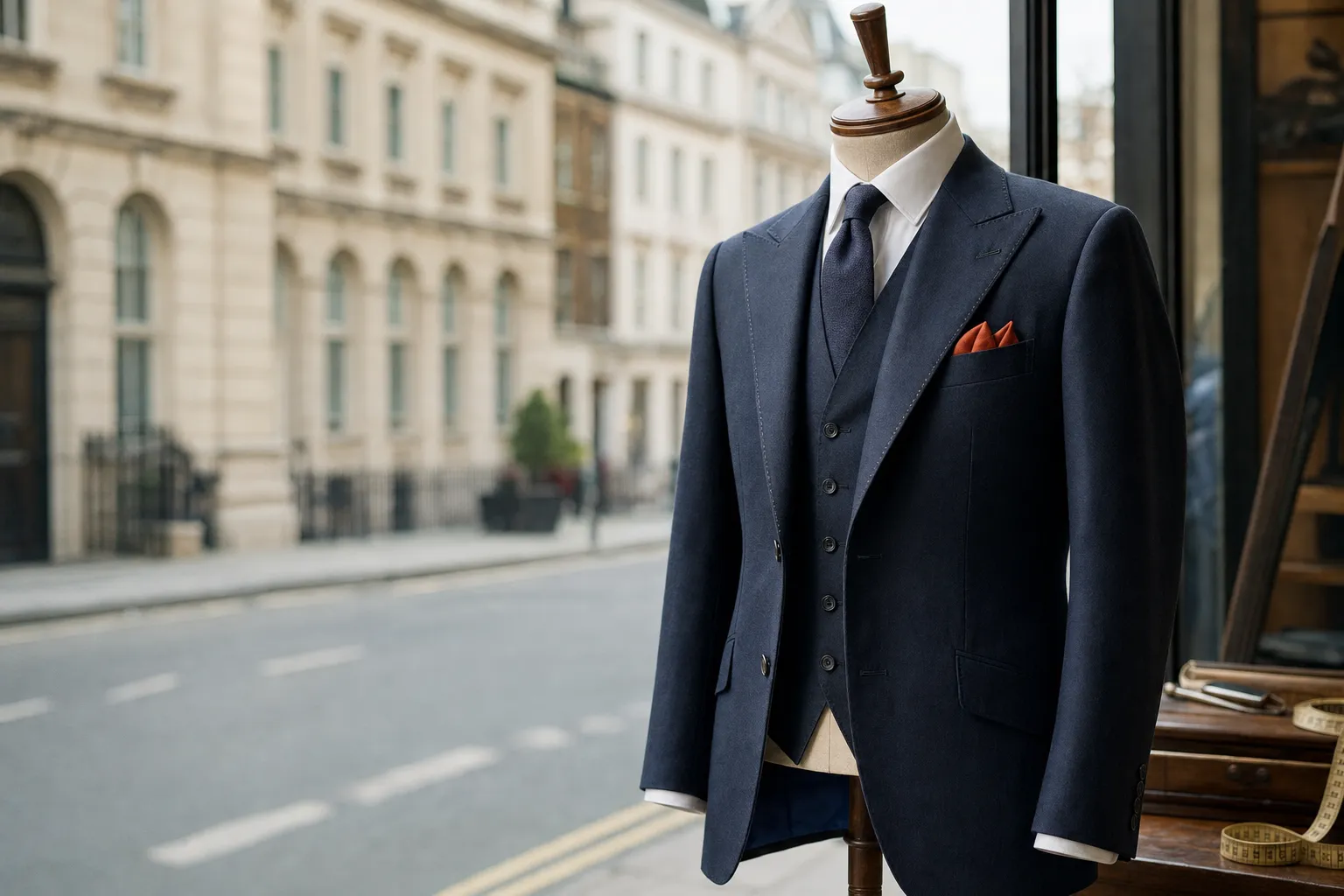
Ask these core questions first: what fabric and weave suit the ceremony and season, how the jacket and waistcoat should fit for morning dress, how many fittings are included, and what the production timeline will be. We answer those questions for clients in Queenhithe and across London so you know what to expect before we make a pattern and cut the cloth.
Why these questions matter
Morning dress follows a long standing code and the fabric and cut change how formal the outfit reads and how it behaves in the day. Choosing fabric and construction early helps avoid changes later, and it makes sure the finished morning suit sits correctly with trousers and waistcoat. At Dress2Kill we use in person consultations and fittings to balance style, durability and comfort.
Questions to ask, step by step
- What is the event dress code. Tell us the ceremony time and venue, whether the invitation specifies morning dress, and any family or church traditions you must respect. That determines whether a frock coat, morning coat or an alternative cut is appropriate.
- Which fabrics work best for the season and the occasion. Ask about weight, weave and fibre content. Worsted wool in a mid to heavy cloth is the traditional choice for morning wear, while wool silk blends and barathea give a refined drape. If the event is in summer, lighter worsted or tropical weave cloths are common.
- How should the jacket and waistcoat fit. Discuss shoulder line, chest ease and how high the waistcoat sits. Morning coat proportions differ from lounge or business jackets, so the pattern should reflect the correct sweep and balance for your posture.
- What trousers pair best with a morning coat. Confirm stripe width and fabric match. We discuss waistband construction, pleat options and whether braces are preferred over side adjusters.
- What lining and finishing choices affect comfort and wear. Lining weight, canvas construction and internal pockets change how the coat shapes and lasts. Ask about collar roll, lapel roll and hand finishing on the seams.
- How many fittings will there be and when they happen. A measured first fitting, a basted fitting and a final fitting are common. Ask when those fittings fall relative to your wedding or event date so alterations can be completed in time.
- Who makes the pattern and where is the work done. Check whether pattern cutting, sewing and finishing happen in house or with specialist workshops. That affects lead times and the tailor points you will meet.
- What accessories should be chosen at the same time. Waistcoat style, tie or cravat type, pocket square, and footwear affect the overall look. Coordinating these choices during the tailoring process avoids last minute mismatches.
How we approach fabric selection
Fabric choice changes how formal a morning suit feels and how it behaves across a long day. At the consultation we show cloth samples and explain the trade offs between drape, creasing, breathability and sheen. We discuss traditional weaves such as barathea and worsted, and we explain when blends or lighter tropical weaves are sensible.
Pro tip: Ask to see cloths held up under daylight. Colour and subtle texture are easier to judge in natural light, and that helps you see how the suit will photograph at a wedding.
For more on textile choices and how they change the final garment, read our guide to Morning Suit Fabrics and our broader Suit Fabrics resource.
What happens during a tailored morning suit consultation
We begin with a conversation about the event, your wardrobe and how you want to move in the garment. Then we measure precisely, discuss cloth options, and lay out a proposed timetable for fittings.
Our typical process
- Initial consultation. Discuss occasion, look and fabric samples.
- Measurements and pattern making. We create a paper pattern from your measurements and posture notes.
- Basted fitting. A first try to see shape and balance, then record adjustments.
- Final fitting and finishing. Check length, trouser break and waistcoat sit before finishing stitches and pressing.
We document every change so the pattern can be used for repeat garments. See our service page for tailored morning suits for a description of what we offer at Dress2Kill: Tailored Morning Suits.
Preparing for your first appointment
Arrive with reference photos, invitation details and a note of items you may want to wear with the suit. Bring any shoes you plan to use so we can check length and proportion.
What to bring
- Invitation or event brief with time and venue
- Reference images that show shape and detail you like
- Everyday shoes for trouser length checks
- Notes on any family or dress code requirements
Watch out: Buying cloth or a ready made waistcoat without consulting your tailor can cause sleeve length and proportion problems. The final balance is decided in the pattern stage, not when the cloth is ordered.
Common misconceptions
People often expect a morning suit to be the same as a business coat. It is not. Morning coat cut, waistcoat height and trouser stripe are all specific. Another misconception is that heavier cloth always looks smarter. Heavier fabrics can be right in winter, but they may crease or feel heavy during a summer day.
For fitting specifics and how we adapt the pattern for posture, see our Morning Suit Fit guide.
Who to ask about standards and definitions
For background on bespoke tailoring definitions you can consult the Wikipedia entry on bespoke tailoring, which explains how bespoke differs from made to measure. We use that background to explain why pattern cutting is central to the process, and why fittings matter for morning dress.
We will also advise about any venue or institutional dress code requirements you mention at your appointment, because those practical details shape fabric and cut decisions.
Key questions to confirm before we begin
- Which fabric and weave have you chosen for coat and trousers
- How many fittings are scheduled and when they are
- Which waistcoat style you prefer, single or double breasted
- Which trouser waistband and fastening you prefer
- Which finishing details matter to you, such as lining or button choice
Key takeaway
Ask about fabric, fit, fittings and the production timeline first. Those four topics decide the look and the likelihood of needing major changes later. A clear brief at the first consultation saves time and gives a morning suit that suits the occasion and wears well.
Frequently asked questions
How long does it take to make a tailored morning suit?
Times vary with cloth choice and the workshop schedule, but most bespoke morning suits require multiple fittings over several weeks. Tell us the event date at the initial consultation so we can plan the timetable.
Can I bring a photo of a style I like?
Yes. Reference images are helpful. We will discuss how the proportions translate to your posture and make pattern adjustments so the style reads correctly on you.
Should trousers match the coat cloth exactly?
Traditional morning dress pairs a plain darker coat with striped or contrasting trousers. Matching cloth is possible, but it changes how formal the outfit reads. Discuss pairing options during the fabric selection stage.
How many fittings are typical for a morning suit?
Three fittings is a common sequence: measurement and pattern, basted fitting to check balance, and final fitting for length and finishing. We can adapt the number of fittings to the client and the timetable.
What if I need changes after the final fitting?
Minor adjustments can usually be made, but major reworking after final finishing is difficult. That is why we emphasise clear decisions during the basted fitting stage.
Where to find us and learn more
See Dress2Kill on Google for reviews and directions, and read more about our services and topics on this site. Useful pages include our Tailored Morning Suits service page, our Morning Suit Fabrics topic, and our Locations page for how we help clients across London and in Queenhithe.