
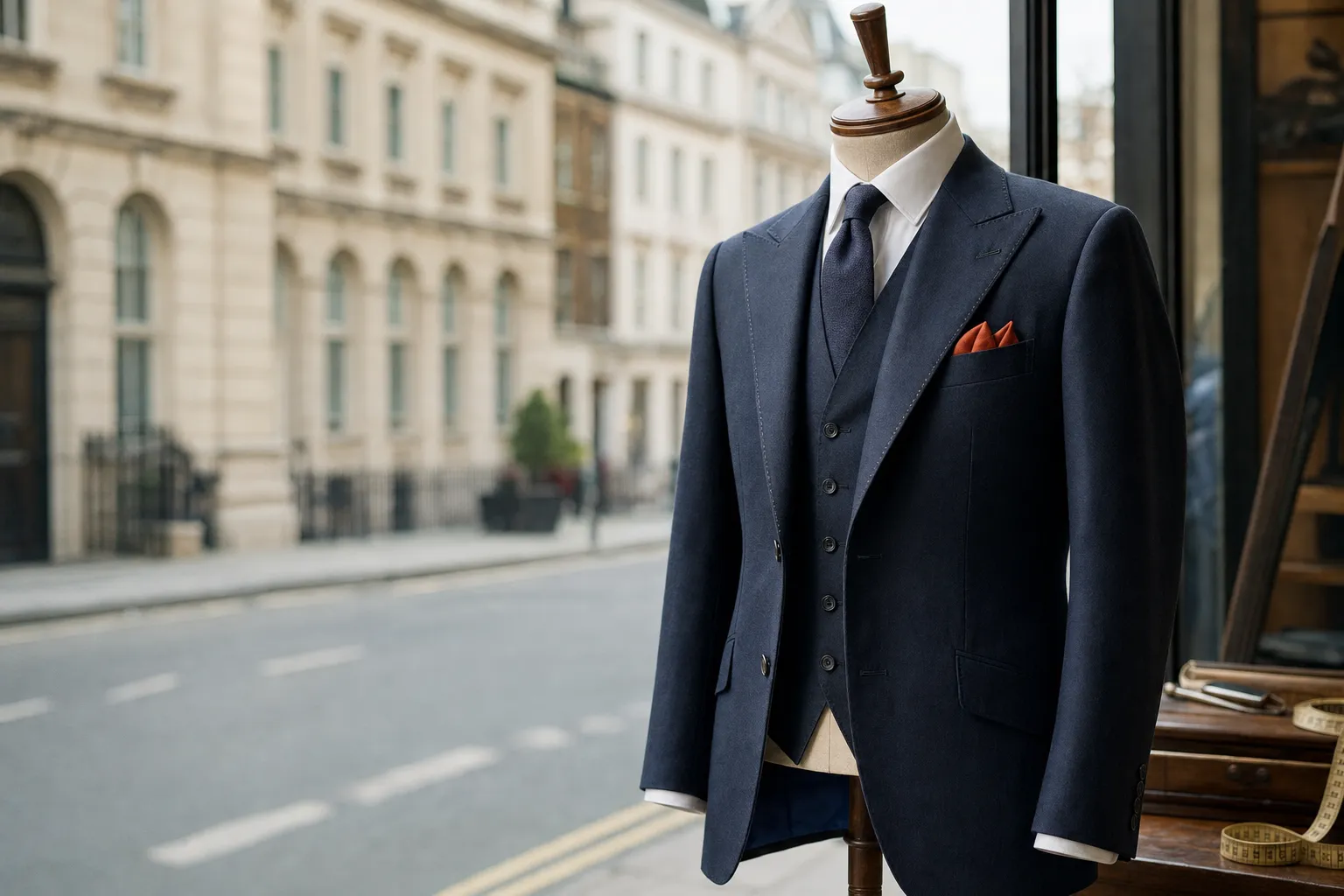
Tailored wedding suits and bespoke suits share the same core priorities: fabric, fit and finish. At Dress2Kill in Lambeth we apply those priorities to wedding suits while adapting details for season, venue and dress code.
How fabric choice shapes a wedding suit
Fabric determines how a suit hangs, how it moves during the day, and how it photographs. The same fabric principles that guide a bespoke business suit apply to a tailored wedding suit, but the final choice depends on practical factors such as the ceremony location, expected weather and the overall wedding style.
Key fabric qualities to consider
- Drape. How the cloth falls over the body affects silhouette and perceived fit.
- Weight. Lighter weights suit warm weather and travel friendly wardrobes, heavier weights give structure and resilience for formalwear.
- Texture. Smooth worsted wool looks formal, subtle textures such as hopsack or tweed read more relaxed or traditional.
- Durability. Wedding garments should tolerate fittings, travel and repeated wear if the client wants an heirloom piece.
- Finish and sheen. A soft sheen can look dressy under event lighting; a matt finish reads more daytime and formal.
Common fabrics for wedding suits and why they are chosen
Below are fabrics we frequently recommend and the wedding situations they suit. These options reflect the same choices we make for bespoke suits, with small adjustments for wedding use.
Worsted wool
Worsted wool is the workhorse of tailored and bespoke suiting. It is versatile, resists creasing and comes in a range of weights. For a formal indoor wedding in Lambeth or central London, a midweight worsted in a classic navy or charcoal is a reliable choice.
Wool flannel and brushed wools
Flannel offers a softer hand and warmer feel. It suits autumn and winter weddings and delivers a slightly more textured, traditional look for morning dress or country house venues.
Tweed and country wools
Tweed adds texture and character. It is appropriate for rural or informal weddings and pairs well with morning suit silhouettes. Tweed behaves differently to smooth worsted wool, so patterning and body need to be considered by the cutter.
Mohair and mohair blends
Mohair imparts a subtle lustre and excellent drape. It is often blended with wool to add resilience and sheen. It is a good option for evening suits or dinner jackets where a refined finish is wanted without a satin facing.
Silk and silk blends
Pure silk suiting is uncommon for a full daywear suit because silk creases easily. However, silk is widely used in linings, waistcoats and evening jackets. Silk blends can provide a touch of luxury while improving practicality.
Linen and lightweight cotton
Linen breathes and is ideal for summer ceremonies, particularly outdoors. It creases easily, which becomes a style choice rather than a flaw. For a crisper look with similar breathability, a linen wool blend offers compromise.
Blends and performance cloths
Modern blends add stretch, crease resistance or easy care. They can be useful for destination weddings or when a suit must travel by air. We weigh the tradeoffs between convenience and the traditional hand of natural fibres.
How fabric affects construction and fit
The same construction techniques we use for bespoke suits apply to wedding tailoring. Fabric choice informs every decision from canvas type to lining and seam finishing.
- Canvassing. A fully canvassed chest keeps shape and improves drape; the canvas interacts differently with soft linens than with structured worsteds.
- Interfacing and collar roll. Thinner fabrics often need lighter interfacings to preserve a natural roll; heavier cloth supports stronger interfacings for a crisp lapel.
- Seam allowance and pattern ease. A cutter will add or reduce ease to suit the cloths stretch and recovery. That tailoring judgement is the same in a bespoke suit and in a tailored wedding suit.
Choosing a fabric by wedding style and season
Think about the wedding as a whole. The gown, venue, and lighting affect how a colour and texture will read. Below are practical pairings we discuss with clients.
- Formal black tie or white tie. Dark worsted wool or dinner jacket cloth with silk trims for lapels and waistcoat work well for evening formality.
- Daytime formal, including morning dress. Midweight worsted or flannel for cool months, lightweight worsted for spring. Tweed is fine for a country morning suit with rustic styling.
- Beach or summer garden weddings. Linen, lightweight wool or wool linen blends keep you cool and photograph well outdoors.
- City civil ceremony in Lambeth or central London venues. Clean grained worsted wool in mid to dark tones is a safe, photograph friendly choice that suits a range of dress codes.
Quality markers to look for in wedding suit fabrics
When deciding between cloths, focus on indicators that matter in wear rather than marketing labels.
- Handle. The feel between thumb and forefinger reveals hand and drape.
- Weave tightness. Tighter weaves tend to resist wind and show less surface wear.
- Colour fastness. Ask about dyeing methods if the suit will see bright sunlight or frequent cleaning.
- Manufacturer specifications. A reputable mill brief will list fibre content, weight in grams per metre and recommended use. We review those specs when advising clients.
Quick checklist for choosing a wedding suit fabric
- Match the fabric weight to the season and venue.
- Decide if texture or smoothness better suits the dress code and photos.
- Consider blends for travel or extra resilience.
- Check the lining and interlining choices for comfort and breathability.
- Confirm care requirements with the mill or manufacturer notes.
Pro tip: Bring a swatch of the bridal gown fabric or a photograph of the venue. Seeing colours and textures together helps choose a complementary suit cloth.
Watch out: Choosing a fabric only on price or label can produce a suit that photographs poorly or creases excessively on the day. Prioritise feel and drape over trend terminology.
Our process when selecting wedding suit fabrics at Dress2Kill
We follow a clear, collaborative routine that mirrors bespoke practice while keeping the wedding timetable in mind.
- Initial consultation. We discuss venue, season, dress code and wardrobe coordination, and look at fabrics together.
- Fabric selection. We show mill swatches and discuss weights, blends and expected behaviour during an event.
- Pattern and cutting. Our cutters adapt body blocks to the chosen cloth, balancing ease and silhouette.
- Basted fitting. We perform a preliminary fitting to check how the chosen fabric sits and to refine posture based adjustments.
- Final fitting and finishing. We complete any adjustments, apply finishing, and check seams, lapels and linings for presentation.
We do not publish measurements or instruct on home tailoring. Pattern cutting and the interaction between chosen cloth and construction are professional skills that affect the final fit.
Looking after a wedding suit fabric
Proper care keeps a wedding suit wearable long after the event. Follow manufacturer instructions and accept that some fabrics require specialist care.
- Store on a shaped hanger in a breathable cover away from direct light.
- Have garments professionally cleaned and pressed according to the fabric label and mill guidance.
- Allow a rest period between wears to let natural fibres recover their shape.
For guidance specific to a cloth, consult the mill documentation or the fabric label. We review care notes with every client when we deliver a finished suit.
Common misunderstandings about wedding suit fabrics
We hear the same misconceptions at fittings, and clearing them up helps clients make strong decisions.
- Linen always looks casual. A carefully cut linen blend can read formal if paired correctly and pressed before the event.
- Synthetic blends are always inferior. Some modern blends offer useful resilience for travel; the decision should balance appearance and performance.
- Shiny equals dressy. A little sheen can improve evening photography, but excessive sheen can look dated under flash.
Related topics and services
For more on fabric choices and fit, see our topic on Wedding Suit Fabrics. To understand the broader tailoring process, read about Tailored Wedding Suits. For information about where we work and how we serve clients across the city, visit our Locations page.
Frequently asked questions
How do I choose between worsted wool and linen for a summer wedding?
Worsted wool in a lightweight grade will offer a cleaner drape and fewer creases than linen. Linen breathes better and suits a relaxed outdoor setting. Choose linen for a beach or garden wedding where a softer silhouette suits the occasion. Choose lightweight worsted if you want a crisper, more formal look with less visible creasing.
Are blends a good idea for destination weddings?
Blends that include a small percentage of synthetic yarn can reduce creasing and improve travel resilience. They trade some of the natural hand for practicality. We assess each cloth against the trip, the expected climate and the level of finish the client wants.
Will a heavier fabric photograph better than a lighter one?
Not necessarily. Heavier fabrics can hold shape and look structured in photographs, but a lighter fabric with good drape can also photograph well while being more comfortable in warm conditions. Lighting, colour and tailoring quality influence photos as much as fabric weight.
Should a wedding suit be fully canvassed?
Fully canvassed construction improves drape and longevity, especially in the chest and lapel. For a wedding suit intended as an heirloom or to be worn frequently, full canvassing is worth considering. For a travel suit where light weight is essential, a half canvas option can be a practical compromise.
How far in advance should I choose fabric before the wedding?
Plan to select cloth and begin measurements at least three months before the date to allow for fittings and finishing. For more complex garments or bespoke construction expect more lead time. We manage schedules with clients to match the wedding timeline.
Key takeaway
Tailored wedding suits and bespoke suits rely on the same principles of fabric choice, pattern cutting and careful fittings. The right cloth depends on season, venue and the wearer’s priorities, and professional tailoring ensures those choices translate into a suit that performs on the day.
Learn more and read reviews
Check our Google Business Profile to read recent client reviews and get directions. To read more about fabrics, see our Wedding Suit Fabrics topic. To learn how we tailor weddingwear, read about our Tailored Wedding Suits service.