
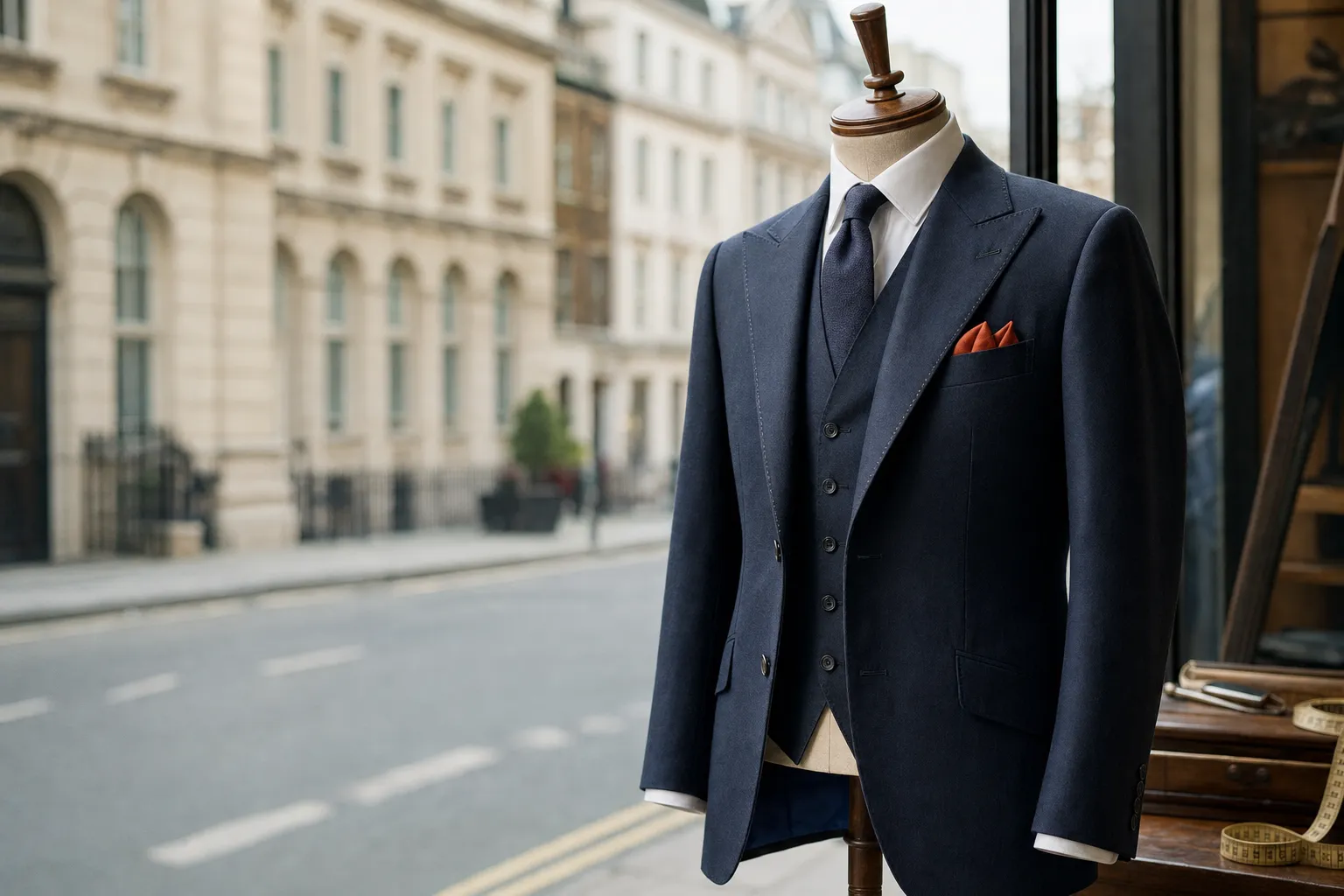
Why fabric choice matters for a tailored ladies jacket
Choosing the fabric for a tailored ladies jacket determines the drape, structure, comfort and how the finished jacket will perform on the day you wear it. The same pattern cut in different cloths can sit and move very differently, so fabric choice is one of the single biggest factors that changes the outcome of a tailored jacket.
Below we explain the main fabric families, how each influences tailoring decisions, what to watch for when you inspect cloth, and how we approach fabric choice for clients who visit our studio in Southwark. You will come away knowing what makes a fabric suitable for a wedding, for daily corporate wear, or for a fashion forward evening look, and what to expect during fittings and finishing.
Fabric families and the effect they have on a jacket
Every fabric family carries its own physical properties, and those properties change how a jacket looks and behaves.
Wool and wool blends
Wool is the traditional choice for jackets for a reason. It has natural resilience, good drape and breathability. Superfine wools, like Merino in 100s counts, produce a smooth, elegant drape for business or formal jackets. Heavier wools or tweeds give more structure and a tailored, sculpted silhouette that suits morning suits and country styles.
Cotton and cotton blends
Cotton is lighter and stiffer than many wools. It gives a crisp, casual look and is a good choice for summer or informal jackets. Cotton creases more readily, so it suits styles where a relaxed, lived in appearance is acceptable rather than highly pressed formality.
Linen and linen mixes
Linen breathes exceptionally well and feels cool, but it creases easily. Pure linen gives a relaxed, textured finish that works for summer events. Linen blended with wool or viscose reduces creasing while keeping much of the cooling effect.
Synthetic fibres and technical cloths
Polyester and other synthetic fibres are often blended in commercial cloths to increase durability, reduce cost and improve crease recovery. Technical fabrics with stretch yarns add comfort and ease of movement. For a bespoke ladies jacket we look for blends where the performance benefit does not harm appearance or drape.
Silk and speciality finishes
Silk linings, satin facing and novelty weaves affect sheen and formal appearance. Silk outer cloth is uncommon for everyday jackets but can create show pieces for evening wear or theatre clients.
- Wool gives structure and refined drape
- Linen gives coolness and relaxed texture
- Cotton gives crisp casual lines
- Blends and technical fabrics add durability and stretch
- Silk and finishes change sheen and formality
How fabric affects the tailoring process
Fabric choice changes several practical steps in making a jacket. We adjust pattern shapes, seam allowance, canvas weight and the number of fittings to suit the cloth.
Pattern cutting and ease
Fabrics with strong drape need less structural ease, whereas stiff cloth may need more shaping to prevent boxiness. When you choose a soft, fluid wool we reduce padding and allow a cleaner fall. For stiff tweeds we add shaping so shoulders and waist read correctly.
Interlining and canvassing
The internal structure, such as full canvas, half canvas or fusible interlining, changes with cloth. Lightweight summer fabrics often work best with lighter canvassing to avoid weighty collars and shoulders. Heavier or coarse cloths need stronger canvassing to keep lapels and fronts stable.
Seam finishing and pressing
Some fibres react badly to heat and steam. Linen and certain synthetics require gentler pressing. Our finishers choose the right steam setting and press cloths so seams sit correctly without damaging the yarns.
Number of fittings
Soft fabrics that settle on the body may need fewer structural adjustments but a careful final drape check. Heavier or unusual cloths sometimes need an extra basted fitting to confirm how the cloth relaxes off the block. We explain this in advance so you know why your jacket may need more or fewer sittings.
Choosing fabric by occasion and season
Your choice depends on where and how often you will wear the jacket.
Work and daily wear
For everyday business wear we favour midweight wools in plain or subtle patterns. They resist creasing, recover well and retain shape through many wears. A navy or charcoal cloth in worsted wool is a versatile starting point.
Weddings and formal events
For wedding jackets we look at sheen, weight and comfort. Midnight blues or rich navy in superfine wool or a wool silk blend create formality with comfortable drape. For morning suits we often choose robust wools that hold sculpted shapes and buttoning lines.
Summer occasions and travel
Linen blends and lightweight cottons keep you cooler but show creasing. If you need a smart appearance on a warm day, a wool linen blend or a tropical wool gives a compromise between coolness and reduced creasing.
Theatre and costume work
Theatre clients sometimes request unusual finishes or heavier weight cloth to read on stage. We select fabrics with reliable colour fastness and stable weave to withstand frequent handling and laundering cycles.
Quality markers: how to judge a cloth you will use for a bespoke jacket
When you examine cloth at the merchant or in our studio, look for these signs of quality and suitability.
- Even weave and yarn alignment without slubs or thick spots
- Consistent colour across the bolt, no streaking
- Appropriate weight to the intended season and style
- Handle the cloth to assess softness, bounce and drape
- Stretch content listed on the label where relevant
- Information on origin and fibre content for care planning
Pro tip: Ask to see a full width of the bolt draped over a mannequin or your shoulder. Draping shows movement far better than a small swatch.
How we work with you at Dress2Kill in Southwark
We start every tailored ladies jacket with a consultation about use and occasion, then select cloth together from merchant samples or our studio book. Our cutters consider the desired silhouette and recommend canvassing and lining suitable for the cloth and occasion.
For clients in London we offer in-person measured fittings and multiple basted fittings when a fabric choice requires extra settling time. Our process emphasises pattern cutting, mock fittings and careful finishing so the jacket’s final behaviour matches the promise of the cloth.
For more reading on fabrics and their characteristics, our topics section on jacket fabrics explains common cloths and their typical uses in more detail.
Tailored Ladies Jackets is the service through which we deliver these choices, and our studio serves clients across London from our Southwark location listed in the locations section.
Practical checklist for choosing fabric
Checklist before you commit to cloth
- Confirm the primary occasion, and whether the jacket must be season specific
- Decide whether you prefer crisp structure or soft drape
- Inspect a full width of the bolt for drape and colour consistency
- Ask about canvas type and whether the cloth needs special finishing
- Discuss care and longevity, particularly for linen and blends
- Plan for the number of fittings likely needed for the chosen cloth
Common misconceptions and decisions we help clients make
We often hear clients assume that softer always equals better, or that heavier cloth is always more formal. In practice these are tradeoffs. A soft, lightweight cloth may crease less elegantly and show wear sooner. A heavy cloth can read as formal but be too warm for certain events.
We guide clients through those tradeoffs, showing samples and finished jackets that demonstrate how a fabric sits after tailoring. If you are balancing several needs, such as travel, climate and formality, a blended cloth or tropical wool often gives the best compromise.
Watch out: Choosing fabric only on appearance from a small swatch can be misleading. Always examine a wide drape and, where possible, see a finished jacket in the same cloth before committing.
Care expectations and longevity by fabric
How you care for the jacket affects how long the cloth will last and how well it keeps its shape.
Wool
Brush after wears, air the jacket between uses and dry clean only when necessary. Good wool recovers well and can last many years with sensible care.
Linen and cotton
These need more frequent pressing to look crisp. Linen in particular creases; that characteristic is part of the cloth but means more frequent touch up is required if you want a very neat look.
Blends and synthetics
Blends often improve washability and crease recovery, but check the label for specialist cleaning instructions. Some technical finishes require specialist cleaning to preserve properties.
Local considerations in Southwark and London
London’s climate and the event calendar influence fabric choices. Humid summers and chilly winters make midweight wool and blends a practical year round option. For weekend theatre work or seasonal events we advise different cloths depending on expected stage lighting and frequency of wear.
We work with clients across London and near Southwark. When you visit our studio we can show cloths suited to local conditions and to the style of events commonly found in the city.
- For year round office wear in London choose midweight worsted wool
- For summer outdoor events consider blends rather than pure linen for less creasing
- For frequent stage use prefer durable weaves with stable colour
Related reading and services
If you want to explore fabric choices in more technical depth, our topic on Jacket Fabrics explains yarn counts, weaves and finishings. For decisions about overall wardrobe planning see our content on Suit Fabrics.
To learn about the fitting process that follows fabric selection, read our piece on Jacket Fit. For service details, refer to our Tailored Ladies Jackets page and our central Locations page to find our Southwark studio information.
Key takeaway
Fabric choice determines a tailored ladies jacket’s final look, feel and performance. Match fabric family to occasion and climate, inspect a full width of cloth, and plan canvassing and fittings to suit the material. When you work with us in Southwark we guide those decisions so the finished jacket matches your use and style.
Frequently asked questions
Which fabric is best for a business ladies jacket?
Midweight worsted wool or a wool blend is typically best for business wear. It balances drape, crease resistance and durability, and reads as appropriately formal for most corporate settings.
Can a linen jacket be tailored to look formal?
Pure linen has an informal, textured finish and creases readily. For a more formal look with similar cooling performance, we recommend a wool linen blend or a lightweight tropical wool which presses crisper while remaining breathable.
How do I know if a cloth needs full canvas or lighter interlining?
The decision depends on weight, weave and desired lapel roll. Heavier or coarse cloths often need stronger canvassing to maintain lapel shape. Lightweight cloths usually benefit from lighter canvassing so the jacket remains fluid. We assess this at consultation and explain our recommendation before cutting.
Will a fabric with stretch change the fit?
Yes. Fabrics with mechanical or elastane stretch provide more ease of movement and can allow a closer cut without restricting motion. We adapt the block and ease to ensure the intended silhouette remains flattering while giving comfort.