
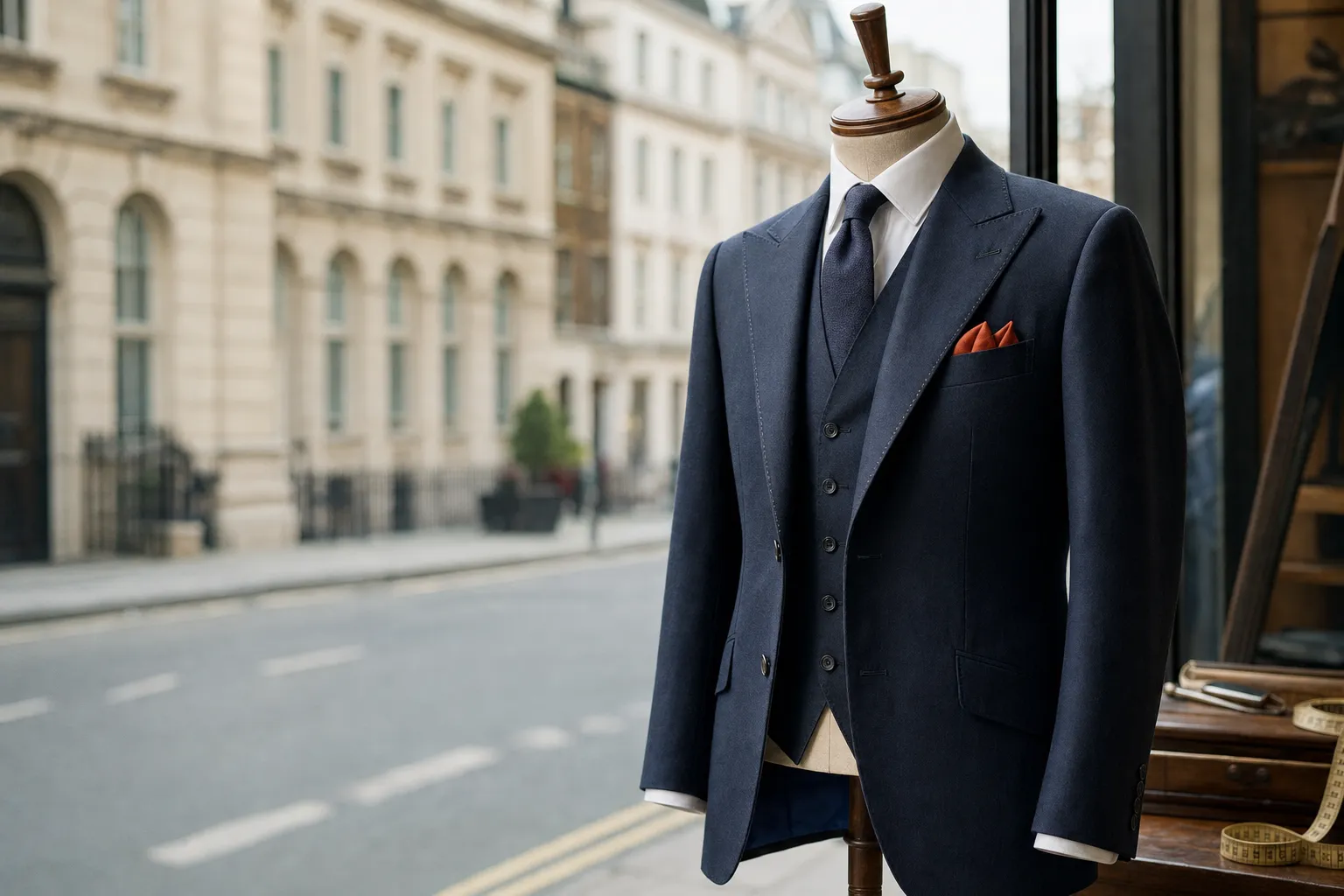
Before you choose help with a tailored business suit, review the fabric, the intended fit, the construction and the tailor's process, because those factors determine comfort, durability and how the suit communicates professionalism. At Dress2Kill we start every commission by clarifying those five points so the finished suit performs for your role and for the season.
What is business suit fabric and why it matters
Business suit fabric is the cloth chosen for a suit and its lining. The fibre content, weave and weight affect how the suit drapes, how long it lasts, how it creases and how you care for it. For a tailored business suit the fabric is not an afterthought, it defines the character of the garment.
We describe fabric by fibre, such as wool, cotton or linen, by weave, such as twill or plain, and by construction, such as half canvas or full canvas mounting. Those choices change both the look and the service life of your suit.
Why fabric choice matters in Castle Baynard and London
Local climate, workplace dress codes and the rhythm of the working week all affect which fabrics suit you. Castle Baynard and central London clients often need suits that travel well between meetings, handle a range of temperatures, and remain smart after sitting on public transport.
That is why we discuss where you will wear the suit, how often it will be worn, and whether you prefer an easy care option or a fabric that rewards careful maintenance. Those details change our recommendation from a lightweight tropical wool for long days to a midweight wool for year round use.
Key concepts to review before you commit
- Fibre content. Natural fibres like wool and cotton behave differently to blends. Wool resists crease and breathes well, linen breathes but creases more.
- Cloth weight and season. Measured in grams per metre or by general terms such as light, medium and heavy. Lighter weights suit summer, medium weights work year round.
- Weave and texture. Twill, plain, hopsack and flannel change drape and appearance. A smooth worsted cloth looks formal, a flannel looks softer and more casual.
- Construction. Full canvas, half canvas or fused lining affect shape retention, longevity and the way the jacket sits on your chest.
- Finish and lining. The lining colour and pocket placement matter for comfort and usefulness. A breathable lining improves wear in the summer.
- Care and maintenance. Some fabrics need professional pressing more often. Think how much maintenance you are willing to accept.
What to inspect during a fabric review
- Examine the cloth weight. Ask to feel samples in your hands and hold them against your shoulder to judge the fall and drape.
- Check the weave close up. Look for evenness of thread and tightness of weave, which affect appearance and durability.
- Consider pattern scale. Pinstripes, windowpane and checks all read differently at close range and over distance.
- Discuss construction options. Decide whether the jacket benefits from a full canvas for longevity or a lighter option for cost and season.
- Ask about sources and care. Where the cloth is woven and the manufacturer care advice can change how you plan to wear the suit.
Fabric comparison table
| Fabric | Suitability | Appearance | Care and durability |
|---|---|---|---|
| Wool, worsted | Formal and year round, good for work wardrobes | Smooth, sharp drape | Durable, resists crease, professional cleaning recommended |
| Wool blend | Everyday wear where cost and easy care matter | Similar to wool, sometimes slightly less crisp | Generally easier to care for but check fibre mix |
| Flannel | Cooler months, more informal business settings | Soft texture, matt finish | Warm and durable, needs occasional pressing |
| Linen | Warm weather, smart casual business | Light, visibly textured, tends to crease | Lightweight and breathable, creases readily so consider intended use |
| Cotton | Casual business and summer wear | Less formal than wool, varied textures | Comfortable and washable in some constructions, less crease resistant |
Checklist: topics to cover with your tailor
Before we start your tailored business suit
- Your primary use and how often you will wear the suit
- Preferred level of formality and any workplace dress code
- Seasonal needs and travel considerations
- Fabric sample review and preference for fibre and weave
- Construction preference, for example full canvas or half canvas
- Choice of lining, pocket options and vents
- Timeline for fittings and expected delivery
- Alteration periods and finishing details
Pro tip: Ask to see complete garment samples rather than only swatches. Seeing how a finished lapel sits and how pockets are positioned tells you more than a small cloth sample.
Common questions we hear
Below are the questions we most commonly answer for clients in Castle Baynard and central London.
- Which fabric is most practical for daily office wear? A mediumweight worsted wool is usually the most practical. It travels well, resists crease and suits most climates in London.
- Can I mix a less formal fabric with a formal cut? Yes, a formal jacket cut can be executed in a softer cloth, but the overall impression will be more relaxed than a worsted cloth.
- How many fittings will we need? We plan fittings according to the complexity of the garment. Business suits commonly require two fittings, more for complicated personalisation.
- Do we source cloth from specific mills? We work with a wide range of reputable mills and can show manufacturer specifications and care guidance on request.
Related services and topics
Fabric choice is closely connected to construction and fit. For guidance on how a suit should sit and how our process works see our topic page on suit fit. For deeper reading about different cloths and their properties visit our suit fabrics page. If you want a business wardrobe or a single work suit our Tailored Business Suits service page explains how we approach commissions.
Related locations and service area
Dress2Kill is based in London and serves clients across the city, including Castle Baynard. For information about where we see clients and studio access, see our locations hub.
Helpful resources and references
For background on the bespoke tailoring tradition see the Wikipedia entry on bespoke tailoring, which explains historical practice and terminology. For fibre specific care guidance consult manufacturer care notes such as those published by The Woolmark Company for wool cloth care and maintenance.
Key takeaway
Choose fabric with the intended use in mind, and review construction and fit with your tailor. The right combination of cloth and make is what makes a tailored business suit both practical and distinctive.
Frequently asked questions
How do I choose between full canvas and fused construction?
Full canvas construction offers better shape retention and longer service life, while fused construction is lighter and usually less expensive. For a business wardrobe expected to last and to keep its shape, we generally recommend a canvas option, but we discuss trade offs at the first fitting.
Which fabrics crease the least for commuting in London?
Worsted wool and quality wool blends crease less than linen or lightweight cotton. The tighter the weave, typically the less visible the crease will be after a day of wear.
Can I get a tailored business suit in a patterned fabric for a conservative office?
Yes, but choose subtle patterns such as a faint pinstripe or a small check. Scale matters, so we show you samples at life size to judge how the pattern reads at a distance.
How should I maintain a tailored suit between professional services?
Rotate suits so they rest between wears, brush them with a soft clothes brush after use, hang them on shaped wooden hangers, and follow the cloth care instructions provided by the mill or manufacturer.
Where to learn more and how to check our local presence
To see client feedback and get directions, we suggest checking Dress2Kill's Google Business Profile. For more reading about fabrics and suit fit browse our topic pages on suit fabrics and suit fit, or read about our Tailored Business Suits service at Tailored Business Suits.
For studio location and how we serve Castle Baynard and other central London neighbourhoods visit our locations hub.